

Last Updated on 2025-11-10
Algae are a natural part of aquatic ecosystems, appearing in almost every aquarium. These organisms grow on tank walls, plants, decorations, and even in the water itself. While small amounts of algae can benefit your tank by producing oxygen and providing food for some species, uncontrolled growth can become a major problem.
Excess algae can make your tank look unclean and create an unhealthy environment. It competes with plants for nutrients, blocks light, and affects water quality. This imbalance can stress your fish and other aquatic life, leading to potential health issues.
Why Controlling Algae is Crucial
Managing algae growth is essential to maintaining a clean and healthy tank. Too much algae can:
- Reduce Oxygen Levels: Algae consume oxygen at night, which can suffocate fish and plants.
- Cause Poor Water Quality: Algae release waste products that impact the chemical balance of the tank.
- Disrupt Aesthetics: A tank covered in algae looks dirty and unappealing.
Common Causes of Algae in Fish Tanks
Algae growth is influenced by several factors, often related to tank conditions. Below, we explore the most common causes in detail.
Excessive Light Exposure
Light is a critical factor in algae growth, as it powers their photosynthesis.
Overuse of Aquarium Lights
When aquarium lights are left on for extended periods, algae get the energy they need to grow uncontrollably. Many aquarists make the mistake of keeping lights on for more than 10–12 hours daily. This prolonged exposure creates a perfect environment for algae blooms.
Impact of Direct Sunlight
If your tank is placed near a window, sunlight can accelerate algae growth. Natural sunlight is stronger than artificial lights, providing algae with the intense energy they need to spread quickly. Even a few hours of daily sunlight can cause algae to multiply rapidly.
Poor Water Quality
Water quality plays a significant role in algae outbreaks. Contaminants and nutrient imbalances provide food for algae, enabling their growth.
Inadequate Filtration
An ineffective or poorly maintained filtration system fails to remove waste and debris from the tank. This buildup leads to high levels of nitrates and phosphates—nutrients that algae thrive on.
Overfeeding the Fish
When fish are overfed, uneaten food settles at the bottom of the tank. As it decomposes, it releases ammonia, nitrates, and phosphates into the water. This nutrient surplus acts as a fertilizer for algae, encouraging rapid growth.
Overstocking the Aquarium
Too many fish in a tank generate more waste than the filtration system can handle. Fish waste also releases ammonia, which eventually converts into nitrates. These elevated nutrient levels provide algae with an ideal environment.
Overdue Water Changes
When water changes are skipped or delayed, organic waste and dissolved nutrients accumulate in the tank. This creates a nutrient-rich environment that supports algae growth. Regular water changes are essential to remove these compounds and keep the tank balanced.
pH and Chemical Imbalances
Unstable pH levels or excess phosphates can also promote algae growth. Phosphates often come from tap water, fish food, or plant fertilizers. If the pH level fluctuates frequently, it creates stress for fish and plants while giving algae a competitive advantage.
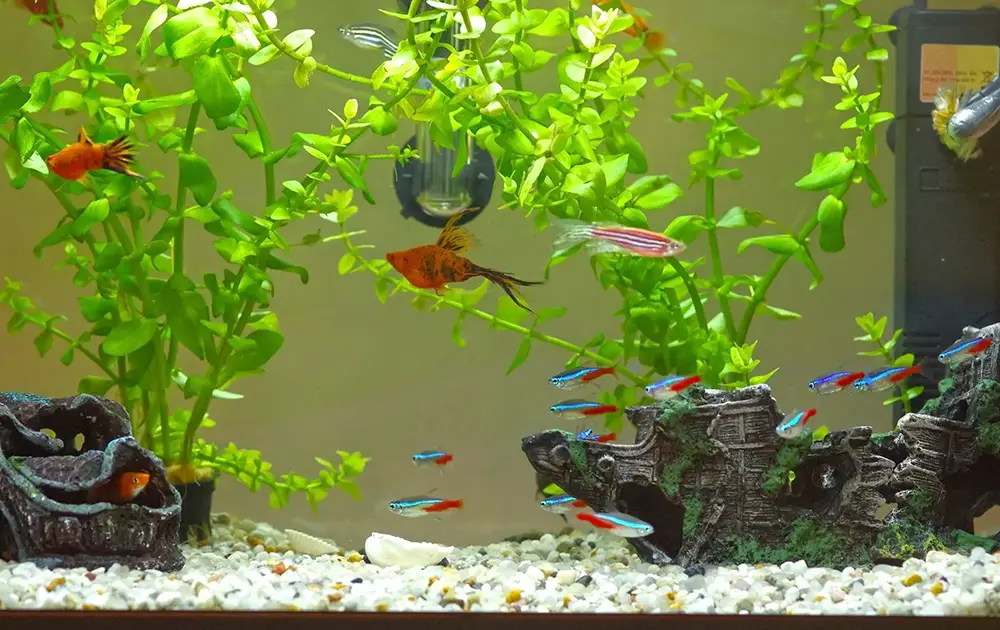
Natural Ways to Remove Algae from Fish Tanks
Controlling algae naturally is an effective and eco-friendly way to maintain a clean tank. These methods rely on simple adjustments and regular maintenance, making them ideal for beginners. Here are the best natural strategies to manage algae growth.
1. Reduce Light Exposure
Light is one of the main factors behind algae growth. Too much exposure encourages their rapid spread.
What to Do:
- Limit the use of aquarium lights to 8–10 hours per day.
- Place the tank away from windows to avoid direct sunlight.
Controlling light prevents algae from getting the energy they need to multiply.
2. Use an Algae Scraper and Gravel Vacuum
Physical removal is a simple and effective approach. Scrapers and vacuums help remove algae from various surfaces.
What to Do:
- Use an algae scraper to clean tank walls.
- Vacuum the gravel during water changes to eliminate debris and algae spores.
This method keeps your tank clean and prevents algae from spreading.
3. Add Algae-Eating Snails or Shrimp
Some species naturally feed on algae. They help control its growth while adding diversity to your tank.
Popular Choices:
- Snails: Nerite snails and mystery snails are excellent algae eaters.
- Shrimp: Amano shrimp are highly effective and safe for most fish.
These creatures are a natural and low-maintenance way to keep algae under control.
Here’s one section of my tank. Try to count all the Ramshorns you see. They’ll also eat any other waste in the tank too, keeping it cleaner and removing food for algae. Just make sure you’re removing the dead ones.
I even put a couple of Elephant Snails in for good measure too.
When you combine shrimp and snails you’re in for a combo that can’t be beat.
For those caring for bettas, you can keep both Ramshorns and cherry shrimp in tanks 5 gallons and bigger too!
4. Regularly Clean and Change Filters
Filters collect waste and debris, which algae feed on. If left uncleaned, they become less effective.
What to Do:
- Rinse the filter media in tank water during maintenance.
- Replace old or damaged filters as needed.
A clean filter keeps water clear and reduces algae’s food supply.
5. Maintain a Clean Tank Environment
Regular cleaning prevents algae from taking hold. Even small maintenance tasks can make a big difference.
Key Actions:
- Remove uneaten food and plant debris promptly.
- Wipe decorations and plants to prevent algae buildup.
Keeping the tank clean reduces nutrients that fuel algae growth.
6. Test and Balance Water Chemistry
Algae thrive in water with high nutrient levels. Testing helps identify imbalances early.
What to Test For:
- Nitrates: Keep them below 20 ppm.
- Phosphates: Aim for levels under 0.5 ppm.
Balanced water chemistry creates a healthier environment for your fish and plants.
7. Avoid Sudden Temperature Changes
Temperature fluctuations can stress fish and plants. This weakens their ability to compete with algae.
Tips:
- Keep the water temperature stable.
- Use a heater to maintain consistent conditions.
Healthy aquatic life helps naturally limit algae growth.
8. Introduce Algae-Eating Fish
Certain fish species feed on algae, helping to control it naturally.
Popular Choices:
- Siamese algae eaters are great for community tanks.
- Otocinclus catfish work well in small aquariums.
Choose algae-eating fish that are compatible with your existing tank setup.
These natural methods are easy to apply and work well together. By incorporating them into your routine, you can enjoy a clean and balanced aquarium without relying on chemicals. In the next section, we’ll explore additional ways to tackle stubborn algae.
Other Effective Methods to Remove Algae
Algae are a common nuisance in fish tanks. They can quickly take over the tank, crowding out other plants and creatures. While algae are not harmful to fish, they can be unsightly and difficult to remove. If you’re struggling with algae in your fish tank, there are a few things you can do to get rid of it.
9. Use Algaecides Safely
Chemical algaecides can eliminate algae quickly, but they must be used with care. These products are potent and can affect the tank’s delicate balance if misused. Always check the label to ensure the product is aquarium-safe. Start with a minimal dose and observe the tank carefully. If used correctly, algaecides can effectively control even the most persistent algae.
10. Dealing with Algae Blooms
When your tank water turns green and cloudy, it’s likely an algae bloom. This happens when free-floating algae multiply in response to excess nutrients or poor lighting control. Begin by reducing feeding and increasing water changes. For example, removing 10–20% of the water daily over a week can gradually clear the bloom. If the problem persists, a UV sterilizer can provide a quick fix by neutralizing the algae cells.
11. Good Cleaning Habits Are Key
A consistent cleaning routine can make a significant difference. Even small steps, like wiping down tank walls or rinsing decorations, help prevent algae from gaining a foothold. For instance, cleaning your tank glass weekly stops algae buildup before it becomes visible. Cleaning isn’t just about appearances—it also reduces nutrients that encourage algae growth.
12. Feeding and Stocking: A Balancing Act
Overfeeding is one of the easiest ways to create algae problems. Uneaten food breaks down and releases nutrients into the water, feeding algae. By feeding your fish only what they can eat in a couple of minutes, you avoid this issue. Overcrowding is another common mistake. Too many fish produce more waste than the tank can handle, leading to algae-friendly conditions. Striking the right balance between fish population and tank size is essential.
13. Lighting Adjustments and Plant Power
The role of light in algae growth can’t be overstated. If your tank lights are on for too long, they’ll fuel algae growth. Use a timer to keep light exposure between 8–10 hours daily. But light management isn’t just about reduction—adding live plants can be a natural way to compete with algae. Fast-growing species, such as hornwort or water wisteria, absorb the same nutrients algae need, effectively starving them out.
14. Rethink Your Additives
It’s easy to overlook how fertilizers or conditioners might contribute to algae growth. Many additives contain phosphates or other nutrients that algae thrive on. Monitor your water’s chemistry and stick to the recommended dosages for all products. Overusing plant fertilizers, for example, can lead to a nutrient spike, giving algae an unintended advantage.
These methods provide diverse approaches to algae control. Whether you focus on improving water quality, adjusting light, or using targeted treatments, every step brings your tank closer to balance. With persistence and a bit of experimentation, you can create a beautiful, algae-free aquarium. Next, we’ll look at handling specific types of algae, like hair algae and those clinging to decorations.
How to Handle Specific Algae Types
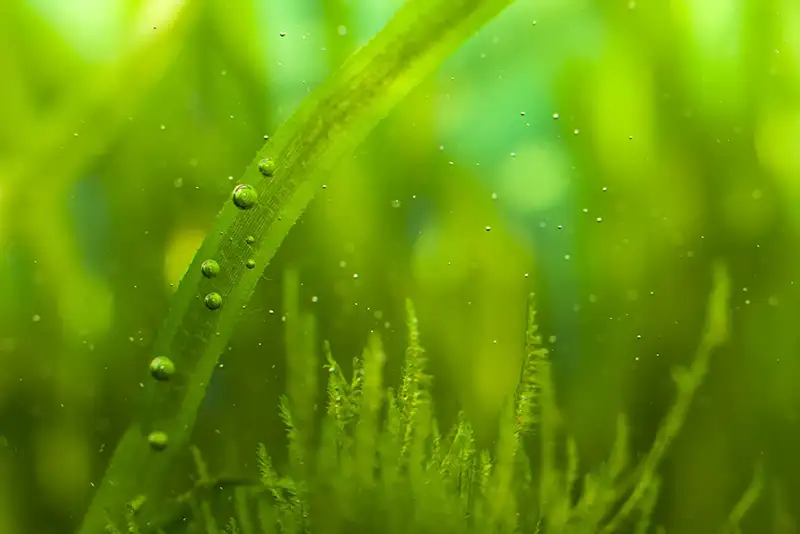
Algae come in various forms, each with unique challenges. Understanding how to manage specific types ensures your tank stays clean and healthy
Hair Algae in Planted Tanks
Hair algae are long, thread-like strands that cling to plants, rocks, and equipment. They can smother plants, slowing their growth and making the tank look neglected.
Manual Removal Techniques
The first step to control hair algae is physical removal. Gently pull the strands off plants using your fingers or tweezers. For plants with delicate leaves, work carefully to avoid damage. If the algae are too entangled, trim the affected areas of the plant. Removing as much algae as possible manually reduces its spread.
Plant More Fast-Growing Species
Adding fast-growing plants like hornwort, water wisteria, or Vallisneria helps control hair algae naturally. These plants absorb excess nutrients from the water, starving the algae of the resources they need to grow. A tank filled with healthy plants is less likely to experience persistent hair algae problems.
Improve Water Source Quality
Hair algae often thrive in tanks with nutrient-rich water. Test your water source for nitrates and phosphates. If levels are high, consider using reverse osmosis (RO) water or a water conditioner to remove these nutrients. Clean water creates a less hospitable environment for algae.
Balance Water Parameters
Imbalanced conditions like too much light or excess fertilizers can encourage hair algae. Test your water weekly and aim for nitrate levels below 20 ppm and phosphate levels below 0.5 ppm. Adjust lighting to 8–10 hours per day to further limit algae growth.
Introduce Algae Eaters
Amano shrimp and Siamese algae eaters are excellent for controlling hair algae. These species feed on the strands without harming your plants, providing a natural and ongoing solution to the problem.
Use a UV Sterilizer
UV sterilizers are effective at controlling free-floating algae spores. While they don’t directly remove hair algae, they prevent it from spreading by killing spores in the water.
Apply Chemical Treatments
In extreme cases, algae-specific chemical treatments can be used. Opt for products that are safe for planted tanks and follow the instructions carefully. Overuse can harm plants and fish, so use this method only as a last resort.
Cleaning Algae Off Decorations
Decorations often become a breeding ground for algae, diminishing their appearance and contributing to the problem. Cleaning them thoroughly restores their visual appeal and prevents algae from spreading.
Bleach Solution for Deep Cleaning
For tough algae stains, a bleach solution works well. Mix one part bleach with 19 parts water. Submerge the decorations for 10–15 minutes to loosen algae. Scrub them with a brush afterward and rinse thoroughly under running water. Let them air dry completely before returning them to the tank to ensure no bleach residue remains.
Boiling Method for Hard Surfaces
For non-plastic decorations like rocks, boiling is a safe and natural cleaning method. Boil the items for 10–20 minutes to kill algae spores and loosen debris. Allow them to cool before placing them back into the tank.
Scrub Brushes for Stubborn Algae
Scrub brushes with stiff bristles are ideal for cleaning large surfaces. Use circular motions to dislodge algae effectively. Avoid metal brushes, as they can scratch delicate surfaces.
Delicate Tools: Toothpicks and Cloths
For intricate decorations, use a soft cloth or a toothpick. A toothpick is perfect for cleaning small crevices, while a cloth is gentle enough for delicate ornaments. These tools allow you to clean hard-to-reach areas without causing damage.
Razor Blades for Glass and Hard Surfaces
For algae on smooth surfaces like glass or ceramic decorations, a razor blade can be an efficient tool. Carefully scrape off algae, keeping the blade at a low angle to avoid scratches. Use this method only on decorations that are sturdy and scratch-resistant.
Regular maintenance is key. Cleaning your decorations monthly prevents heavy algae buildup, reducing the need for harsh treatments.
Cleaning Aquarium Glass
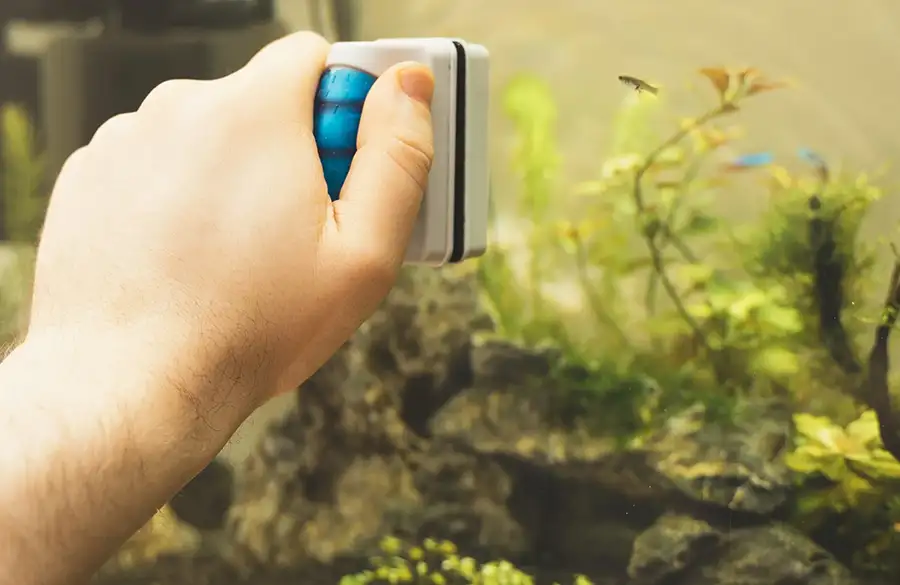
Aquarium glass often gets covered in algae, making the tank look cloudy and dull. Removing algae from the glass not only improves visibility but also enhances the overall beauty of your aquarium. Different tools and techniques can help you get rid of algae efficiently.
Magnet Algae Scrapers
Magnet scrapers are a great tool for cleaning glass without putting your hands in the tank. They consist of two parts: one inside the tank and the other outside, connected by a magnet. As you move the outer magnet, the inner part scrapes off algae. This method is fast and ideal for large tanks.
Handheld Algae Scrapers
For more stubborn algae, handheld scrapers are a reliable option. These scrapers often have blades or rough pads to remove algae from the glass. Always choose tools designed for aquariums to avoid scratches. Regular use prevents algae from building up.
Aquarium-Safe Glass Cleaners
If algae stains persist, try using an aquarium-safe glass cleaner. These products are formulated to remove algae without harming fish or plants. Apply the cleaner to a soft cloth and wipe the outside of the glass for a streak-free finish. Avoid using household cleaners, as they may contain harmful chemicals.
Scrubbing Pads for Tough Algae
Stubborn patches of algae can be removed with scrubbing pads. Choose pads specifically made for aquarium glass to prevent scratches. Focus on corners and edges, as algae often accumulate there.
Cleaning the glass weekly will keep your tank looking clear and inviting. It also reduces the chance of algae spreading to other surfaces.
Removing Algae from Rocks
Rocks add a natural and aesthetic touch to aquariums. However, they can become covered in algae, which dulls their appearance and affects water quality. Regular cleaning keeps them looking fresh.
Step 1: Remove and Rinse Rocks
Take the rocks out carefully to avoid disturbing fish or plants. Place them in a bucket with tank water to preserve beneficial bacteria on the surface.
Step 2: Use an Aquarium Siphon
Before cleaning the rocks, use a siphon to remove debris around them. This step prevents algae spores from spreading when you put the rocks back.
Step 3: Gravel Vacuuming Techniques
For lightly soiled rocks, use a soft-bristled brush. Scrub gently under running water to remove algae without damaging the surface. Avoid using soap or chemicals, as residues can harm your fish.
Step 4: Soak Rocks in Bleach Solution
If algae are deeply embedded, a bleach soak can help. Mix one part bleach with 19 parts water and soak the rocks for 15 minutes. Afterward, rinse them thoroughly and let them dry completely before returning them to the tank. This ensures no bleach remains.
Step 5: Reintroduce Rocks Safely
Once cleaned and dried, carefully reposition the rocks in the tank. Ensure they’re stable and won’t shift, as this could disturb your fish.
Cleaning your rocks monthly prevents algae from taking over and keeps your tank’s natural look intact. With consistent care, rocks will remain a beautiful part of your aquarium.
Cleaning Aquarium Plants
Aquarium plants are vital for a balanced tank, but algae can quickly cover them. This buildup blocks light and reduces the plants’ ability to absorb nutrients. Here are specific ways to clean your plants effectively:
Trim Affected Leaves
If certain leaves are heavily covered in algae, it’s best to remove them. Trim these areas with sharp scissors to encourage fresh, algae-free growth. For slow-growing species like Anubias or Cryptocoryne, focus on the most affected sections to preserve as much of the plant as possible. Trimming also prevents algae from spreading further.
Adjust Fertilizer Levels
Over-fertilization is a common reason algae take over plants. When plants can’t absorb all the nutrients, the excess feeds algae instead. Reduce the amount of fertilizer you use, especially in tanks with slow-growing plants. This small adjustment can significantly lower algae growth.
Increase Light for Healthy Plant Growth
Healthy plants can outcompete algae for nutrients. Ensure your plants receive enough light to thrive, but avoid overexposing the tank, which could fuel algae growth. Balance light exposure to 8–10 hours daily. Adding fast-growing plants like hornwort or water sprite is another excellent way to reduce algae naturally.
Add Algae-Eating Species
Certain tank inhabitants can help manage algae on plants. Amano shrimp, Otocinclus catfish, and nerite snails are great choices. These species nibble on algae without harming your plants, keeping their surfaces clean.
Use Targeted Chemical Treatments
If algae persist, you can use algae-specific treatments. Opt for products labeled safe for aquariums with live plants. Apply sparingly and follow the instructions carefully to avoid harming your fish or beneficial bacteria. Treatments should be your last resort.
Cleaning Algae from Tubing
Tubing is essential for filtration and aeration systems but often gets neglected during cleaning. Algae buildup inside tubing can reduce water flow and interfere with equipment efficiency. Here’s how to clean them effectively:
Use Specialized Cleaning Brushes
Flexible tube brushes are perfect for scrubbing the inside of tubing. Insert the brush and work it back and forth to loosen and remove algae. These brushes are designed to reach tight spots, ensuring thorough cleaning.
Vinegar Solution for Safe Cleaning
A vinegar soak is a gentle and natural way to clean tubing. Combine one part vinegar with three parts warm water in a bucket. Submerge the tubing for 20–30 minutes, then rinse with clean water. Vinegar breaks down algae without leaving harmful residues.
Bleach or Hydrogen Peroxide Treatments
For tougher algae, stronger solutions may be necessary.
- Hydrogen Peroxide: Use diluted hydrogen peroxide to fill the tubing. Let it sit for 15 minutes before rinsing. This option is effective and less harsh than bleach.
- Bleach: Mix one part bleach with 19 parts water. Soak the tubing for 10–15 minutes, then rinse thoroughly with clean water. Let it dry completely before reinstalling.
Commercial Algae Cleaning Products
Specialized algae cleaners are available for tubing. These products are designed to break down organic buildup safely. Follow the manufacturer’s instructions and rinse thoroughly after use.
How to Prevent Algae Growth in Fish Tanks
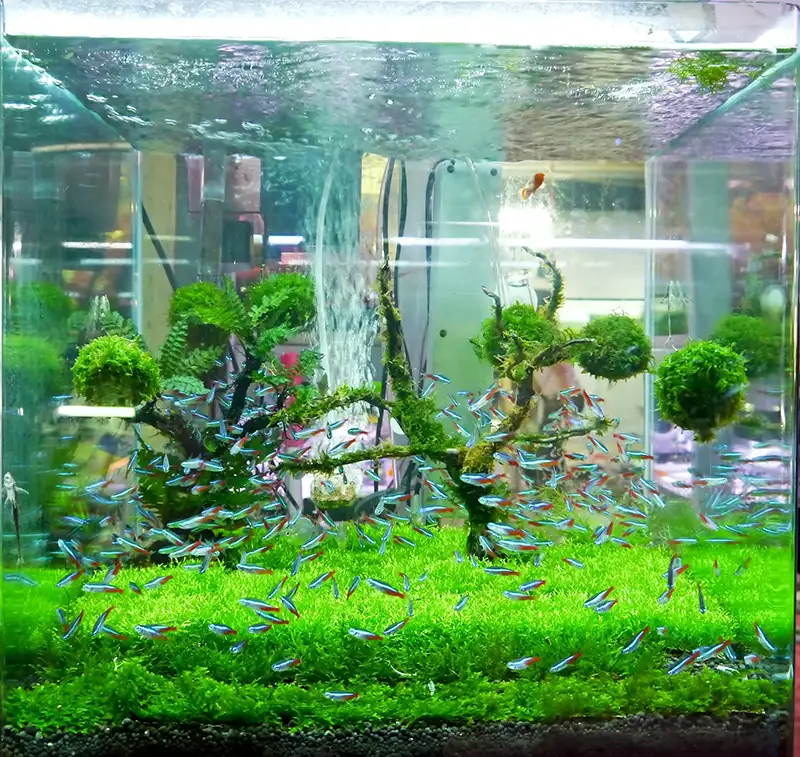
After cleaning your aquarium, you may be wondering how to keep the algae from coming back. Preventing algae is easier than dealing with it after it takes over. A few consistent habits can help maintain a clean and healthy tank. Here are the most effective ways to keep algae at bay:
Maintain Regular Tank Cleaning Routines
Cleanliness is the cornerstone of algae prevention. Regularly remove debris, uneaten food, and waste. Scrubbing tank walls once a week prevents algae from forming visible patches. Siphoning the substrate during water changes helps remove hidden nutrients that algae thrive on.
Feed Fish Appropriately
Overfeeding is a common mistake for beginners. Uneaten food breaks down and releases nutrients like phosphates and nitrates into the water. These compounds fuel algae growth. Feed your betta fish only what they can eat in 2–3 minutes, twice a day. Remove any leftover food immediately.
Optimize Lighting Levels
Excess light promotes algae growth. Adjust your aquarium lights to stay on for no more than 8–10 hours daily. Use timers to control the duration. Avoid placing the tank near windows to limit exposure to direct sunlight. Balanced lighting benefits plants while keeping algae in check.
Avoid Phosphate-Containing Products
Many fish foods and water conditioners contain phosphates. These chemicals can accumulate in your tank over time, creating an algae-friendly environment. Choose phosphate-free options whenever possible. Test your water regularly to monitor phosphate levels.
Use Phosphate Removers or Algaecides
If phosphates remain high, consider using a phosphate remover. These products bind to the phosphates, preventing algae from using them. Algaecides can also be effective but should be used sparingly. Overuse can harm fish and plants.
Change Water Regularly
Frequent water changes dilute excess nutrients. Replace 20–25% of the water weekly to keep nitrates and phosphates low. Always use dechlorinated or conditioned water to avoid shocking your fish.
Steps for Using Hydrogen Peroxide for Algae Control
Hydrogen peroxide is a safe and effective solution for removing stubborn algae. When used correctly, it targets algae without harming your fish or plants. Follow these steps for best results:
Step 1: Prepare the Tank
Begin by performing a large water change. Remove 20–30% of the water to dilute any excess nutrients. If the algae problem is severe, consider removing sensitive fish and plants to a temporary holding tank.
Step 2: Apply Hydrogen Peroxide
Use a 3% hydrogen peroxide solution. For spot treatment, use a syringe to apply the peroxide directly to the algae. If treating the entire tank, dose no more than 1–2 milliliters per gallon of water. Add the peroxide slowly to avoid shocking your aquatic life.
Step 3: Allow Time for the Peroxide to Work
Leave the tank undisturbed for 15–20 minutes. During this time, the peroxide will break down the algae. You may notice bubbles forming around the algae as it reacts with the peroxide.
Step 4: Perform Another Water Change
After treatment, perform another partial water change. This removes dead algae and any remaining peroxide. Vacuum the substrate to clear out any debris from the algae.
Step 5: Observe the Tank
Monitor your tank for the next few days. Check water parameters to ensure everything remains stable. If any algae persist, repeat the treatment after a week.
FAQ: Common Questions About Algae Control
What Does Dead Algae Look Like?
Dead algae often lose their vibrant green or brown color and turn pale, white, or gray. It may detach from surfaces and float around the tank or settle on the substrate. Be sure to remove dead algae quickly, as it can decompose and release harmful nutrients into the water.
How Does Copper Sulfate Kill Algae?
Copper sulfate works by disrupting algae’s ability to photosynthesize. It destroys their cells, killing them effectively. However, copper can harm invertebrates like snails and shrimp. Always use it carefully and follow the recommended dosage. Monitor your tank’s copper levels to ensure the safety of your betta fish.
Do Snails Eat Algae In Fish Tank?
Yes, snails are excellent algae grazers. Nerite snails are particularly effective, cleaning tank walls, plants, and decorations. Mystery snails and ramshorn snails also eat algae but produce more waste. If adding snails, ensure your betta fish is tolerant of them and maintain proper water quality.
What Fish Are Best for Eating Algae?
Several fish species excel at eating algae. Otocinclus catfish are gentle and compatible with bettas. Siamese algae eaters are another popular choice, especially for larger tanks. For smaller setups, consider adding shrimp or snails instead. Always research compatibility before introducing algae-eating fish to your tank.
Does Light Color Affect Algae Growth?
Yes, light color can influence algae growth. Algae thrive under white and green light, as these wavelengths are optimal for photosynthesis. Red and blue light, often used for plants, tend to be less favorable for algae. Using adjustable-spectrum lights can help balance plant growth while reducing algae.
What Is An Algae Scrubber?
An algae scrubber is a filtration device designed to encourage algae growth in a controlled area. It diverts nutrients like nitrates and phosphates from your tank, allowing algae to grow on the scrubber instead. Once the scrubber fills with algae, you clean it, reducing algae levels in the tank. These tools are effective for larger or heavily stocked aquariums.
Recap
Algae can be a big problem in fish tanks. They can quickly take over the tank and make room for nothing else. You can get rid of algae in your aquarium in a few different ways. Change the water often, turn down the light, and don’t feed the fish too much. Use an algaecide or add animals that eat algae to your tank to get rid of algae. Most aquariums look good for weeks or even months until algae start to grow on them. Algae blooms can be annoying, but if you follow the simple tips we gave, you can get rid of them.