Last Updated on 2025-11-10
Quick Answer: The best plants for betta fish are hardy, low-maintenance species that offer shelter, surface cover, and enrichment without demanding high light or CO2. For most beginners, start with Anubias Nana, Java Fern, and Marimo Moss Balls for easy wins; add Red Root Floaters or Dwarf Water Lettuce for calming surface shade, and round out the scape with background choices like Hornwort or Cabomba, plus a grass-like carpet from Dwarf Sagittaria. These plants are gentle on delicate betta fins and thrive in typical betta parameters.
Top Picks at a Glance
- Anubias (Anubias barteri var. nana): Broad resting leaves, low light, tie to wood/rocks.
- Java Fern (Microsorum pteropus): Beginner-proof, low light, rhizome plant (don’t bury).
- Marimo Moss Balls (Aegagropila linnaei): Zero fuss; enrichment as bettas nudge them.
- Red Root Floaters (Phyllanthus fluitans): Surface shade, encourages bubble-nesting.
- Dwarf Water Lettuce (Pistia stratiotes var.): Dramatic roots, great cover; easy nutrient uptake.
- Hornwort (Ceratophyllum demersum): Fast-growing, planted or floating; nitrate-hungry.
- Cabomba (Cabomba caroliniana): Soft, feathery background “forest” effect.
- Dwarf Sagittaria (Sagittaria subulata): Grass-like clumps/carpeting without CO2.
Why Do Bettas Like Plants?
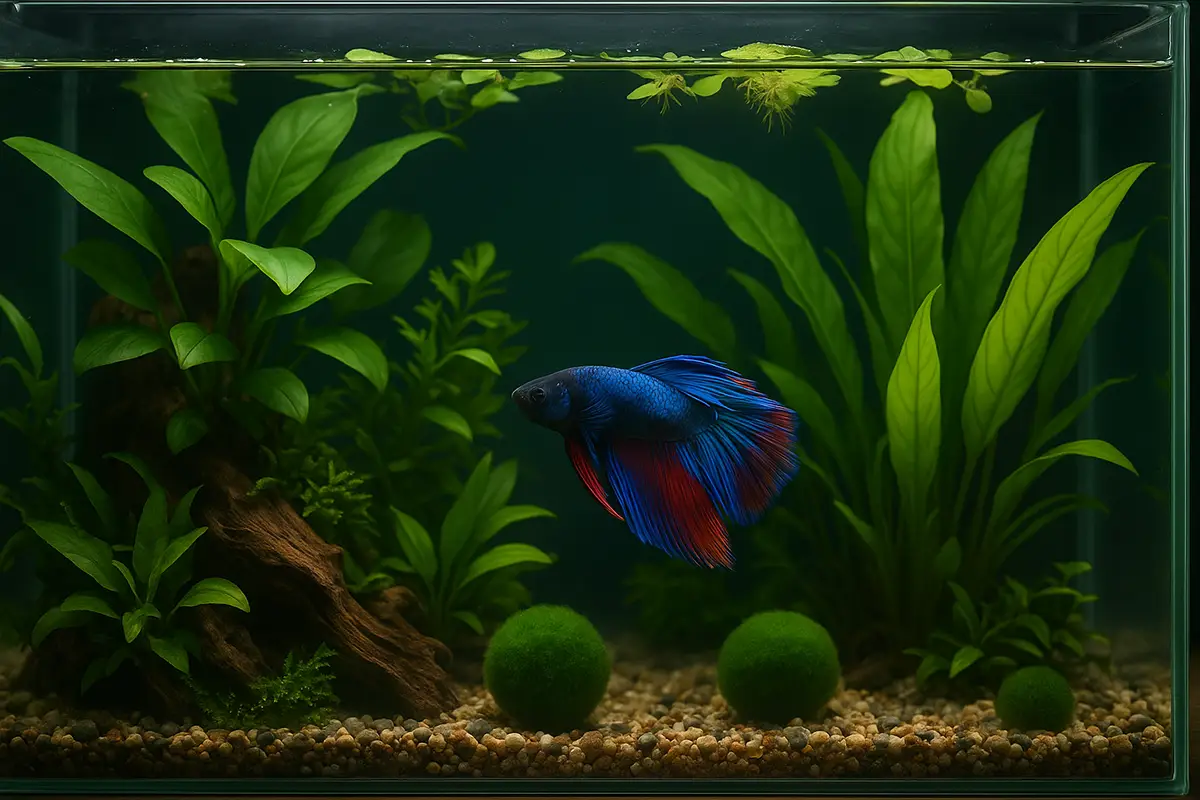
Live plants replicate the quiet, plant-choked waters bettas come from. Plants create shade, break sightlines, and offer bedding leaves and hideaways. In short, plants make tanks feel safe and interesting. That means calmer fish, more natural exploring, and—often—better coloration and feeding response.
They Provide Hiding Places
Dense groups of stems or grassy clumps let your betta “disappear” on demand, lowering stress and aggression. If you keep tank mates, plants become even more important.
They Make the Tank Feel Natural
Surface floaters mimic wild cover and soften light. Natural layouts encourage bubble nests and confident behavior.
They Keep Bettas Engaged
Plants turn a bare glass box into a miniature jungle with routes to explore, leaves to lounge on, and roots to wiggle through.
Best Live Plants for Bettas
There are so many to choose from! Some of them are real, some fake. Some are submerged while others constantly float on the surface of the tank. Whatever you’re choice they’re all going to bring a lot of life and vibrancy to your tank, and they’re all excellent choices.
Use this section as a pick-list. Each plant includes why it works for bettas, care level, placement, and lighting.
Anubias (Anubias barteri var. nana)
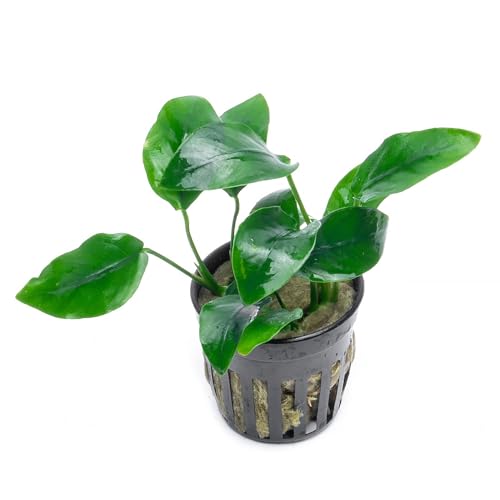
- Anubias Nana is one of the most popular aquatic plants loved by both beginners and experts alike, and will instantly give your aquarium, paludarium,…
- Known for its smaller stems, rich green tone, and pointed leaves, this aquatic plant is great for filling up open space and can be placed in the…
Anubias is a classic low-light rhizome plant from Africa. Keep roots unburied and attach to décor. It typically reaches 2–6 inches in height—perfect for midground structure.
Why it’s great for bettas: Thick, broad leaves form natural “hammocks” for resting. Anubias tolerates low light and fluctuating conditions, making it a top beginner pick.
How to plant: Do not bury the rhizome. Tie or glue to wood, rock, or décor. It grows slowly—less trimming, less mess.
Lighting: Low to medium light for slow, compact growth. Strong light increases algae spotting.
Planting: Tie to wood/rock; avoid burying the rhizome or it will rot.
| Care Level | Beginner |
| Lighting | Low–Medium |
| Placement | Midground/Attached to décor |
| pH | 6.0–7.5 |
| Temp | 72–82°F |
| Notes | Avoid direct burial of rhizome; slow grower, algae can spot leaves under high light. |
Java Fern (Microsorum pteropus)
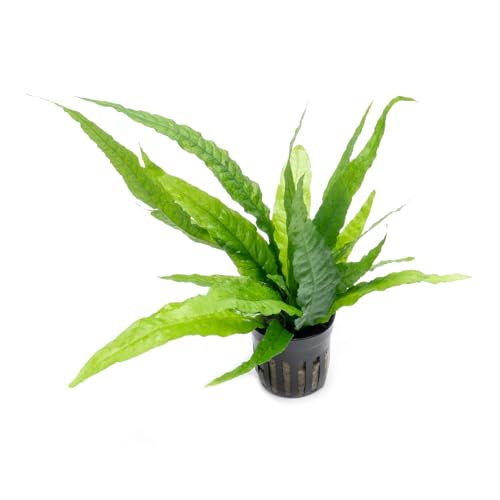
- Java Fern is one of the most popular aquarium plants and is loved by all skill levels due to its ease of care and its ability to instantly transform a…
- Bright green and pointed leaves will fill up space and complement driftwood and stones very well, and because Java Fern are epiphytic, they do best…
Java fern is native to Southeast Asia and can grow emersed or submerged. Mature plants can reach ~13 inches tall and 6–8 inches wide. It’s best in tanks of 10 gallons and up so leaves can spread naturally without crowding.
Why it’s great for bettas: Long, soft leaves create gentle cover without tearing fins. It’s famously forgiving—perfect for first aquascapes.
How to plant: Don’t bury the rhizome. Tie to wood/rock and let roots attach naturally. For propagation, split the rhizome or let plantlets mature on leaves.
Lighting : Thrives in low light; excessive light can cause translucent patches. Shade it under taller plants or keep the photoperiod modest.
Planting : Tie to décor rather than burying in the substrate. Burying the rhizome suffocates it and causes rot. For propagation, split the rhizome or let plantlets mature on leaves.
| Care Level | Beginner |
| Lighting | Low |
| Placement | Mid–Background, attached |
| pH | 6.0–8.0 |
| Temp | 60–83°F |
| Notes | Too much light may turn leaves translucent. Great in shaded areas. |
Marimo Moss Balls (Aegagropila linnaei)
No products found.
Why it’s great for bettas: Bettas often nudge or perch on them, adding enrichment. Marimo tolerates low light and helps trap fine debris.
How to “plant”: Simply place in the tank. Gently roll during water changes to keep them round; rinse if grimy.
| Care Level | Beginner |
| Lighting | Low |
| Placement | Foreground/Free-standing |
| pH | 6.5–8.0 |
| Temp | 68–78°F |
| Notes | Gently clean if algae or detritus accumulates; avoid extreme heat. |
Red Root Floaters (Phyllanthus fluitans)

- 40+ LEAVES – You will receive plants with a combined total of 40 leaves or more (see 2nd pic for approximate size).
- INCLUDES MYSTERY BONUS PLANT – You will get a small batch of a mystery bonus plant we think you will like.
Why it’s great for bettas: Creates soft surface shade and red roots that look stunning under light. Can encourage bubble-nesting and reduce stress by breaking surface glare.
How to plant: Don’t plant—float. Skim a small open area for gas exchange and feeding. Thin regularly to prevent full surface coverage.
| Care Level | Beginner–Intermediate |
| Lighting | Medium (reddens under higher light) |
| Placement | Floating, surface |
| pH | 6.0–7.5 |
| Temp | 72–82°F |
| Notes | Likes gentle surface flow. Remove excess to keep feeding lane open. |
Dwarf Water Lettuce (Pistia stratiotes var.)

- 12 Dwarf Water Lettuce, Pistia stratiotes, Live Aquarium/Floating/Aquatic Plant
- Water Type:Fresh Difficulty Level:Beginner Water Temperature:Tropical Species:Floating Plant
Why it’s great for bettas: Long, elegant roots create a “jungle curtain” for hiding and exploring; excellent at nutrient uptake to help with algae control.
How to plant: Float on the surface. Avoid splashy filters that soak the rosettes. Thin to prevent total coverage.
| Care Level | Beginner |
| Lighting | Low–Medium |
| Placement | Floating, surface |
| pH | 6.0–7.5 |
| Temp | 72–82°F |
| Notes | Great for nutrient control; trim roots if they overwhelm swim space. |
Hornwort (Ceratophyllum demersum)

- You will get 1 bundle, each bundle contains 3 stems. The plants will be similar to the one that you see on the picture of the listing. I will also include a mystery plant of my choosing.
Hornwort is worldwide and fast-growing—great for nutrient control. Give it room in 15 gallons+ if you want to avoid frequent trimming.
Why it’s great for bettas: Fast grower that slurps up excess nutrients, helping keep water clearer. Adds feathery cover your betta can dart through.
How to plant: Plant stems or let float. If planting, remove bottom needles so they don’t shed into the substrate. Prune regularly—this one grows fast.
Lighting: Prefers medium–high light for compact, healthy growth.
Planting: Plant after stripping lower needles, or float freely. Prune to prevent overgrowth and needle drop.
| Care Level | Beginner–Intermediate |
| Lighting | Medium–High |
| Placement | Background or floating |
| pH | 6.0–7.5 |
| Temp | 59–86°F |
| Notes | Trim to prevent it from taking over. Can be brittle if neglected. |
Cabomba (Cabomba caroliniana)
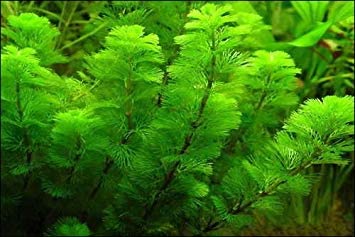
- LIVE AQUARIUM PLANT – 1 Green Cabomba Caroliniana Plant
- SIZE – Our Green Cabomba plants ranges from 7 to 10 inches. Size will vary slightly as these are live plants.
- LIVE ARRIVAL GUARANTEE – We guarantee live arrival on all of our livestock. If a plant ever arrives dead send us a clear photo of the plant in the…
Why it’s great for bettas: Creates a soft “forest” backdrop and breaks sightlines. Bettas love weaving through the fine foliage.
How to plant: Bunch plant into the substrate with plant weights. Provide steady light and nutrients for lush growth.
| Care Level | Intermediate |
| Lighting | Medium |
| Placement | Background |
| pH | 6.0–7.5 |
| Temp | 72–82°F |
| Notes | Trim tops and replant to thicken background “hedge.” |
Dwarf Sagittaria (Sagittaria subulata)

- LIVE AQUARIUM PLANT – 15 Dwarf Sag Plants (Dwarf Sagittaria Subulata)
- SIZE: Our Dwarf Sag Plants ranges from 2-3 inches typically. Size will vary slightly as these are live plants.
- IMPORTANT: Please note that during times of extreme weather, live plants will can suffer due to extreme temps. During winter, do not order live plants…
Why it’s great for bettas: Easy, grass-like look that fills empty space and provides gentle cover near the substrate—no sharp edges.
How to plant: Plant small bunches a few centimeters apart; runners will fill gaps. Works without pressurized CO2.
| Care Level | Beginner |
| Lighting | Low–Medium |
| Placement | Foreground/Midground clumps |
| pH | 6.5–7.5 |
| Temp | 72–82°F |
| Notes | Use root tabs if substrate is inert; trim tips to maintain height. |
Java Moss (Taxiphyllum barbieri)
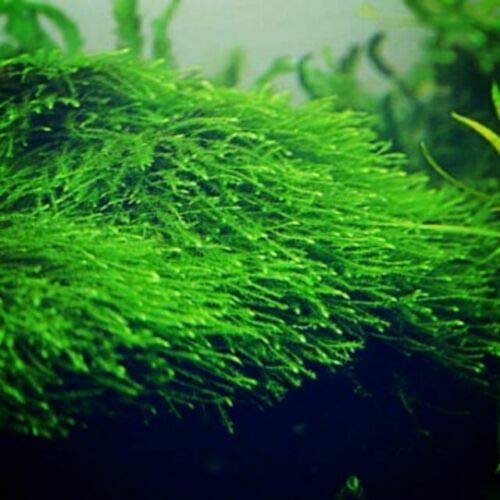
- LIVE AQUARIUM PLANT – 1 Java Moss (Taxiphyllum Barbieri) golf ball size portion
- LIVE ARRIVAL GUARANTEE – We guarantee live arrival on all of our livestock. If a plant ever arrives dead send us a clear photo of the plant in the unopened bag and and we will replace once verified.
- SATISFACTION GUARANTEE – We do our very best to respond fast and ship happy, healthy plants. If you have any questions or concerns please message us we are always happy to help!
- Care instructions: place moss on rock, wood, or a structure and then wrap thread around it to secure the moss so it doesn t go all over the place in the tank
- Sunlight exposure: Partial Sun
Java moss survives in a wide range of conditions and attaches to wood, rock, and décor. It’s ideal for carpeting or creating soft hideouts.
Why it’s great for bettas: Ultra-hardy, latches to anything, and forms soft, safe thickets. Great for crafting “moss trees” and covering wood.
How to plant: Tie to hardscape with thread/fishing line until it grips. In high light it grows compact; in low light it’s looser and darker.
Lighting: Adaptable to low or high light. Higher light yields denser growth; lower light makes it looser and darker.
Planting: Tie to hardscape with fishing line until it latches on. Trim occasionally to prevent detritus buildup.
| Care Level | Beginner |
| Lighting | Low–High (adaptable) |
| Placement | Foreground/Midground on décor |
| pH | 5.0–8.0 |
| Temp | 59–82°F |
| Notes | Trim to prevent detritus build-up; easy carpeting option. |
Anacharis / Elodea (Egeria densa)
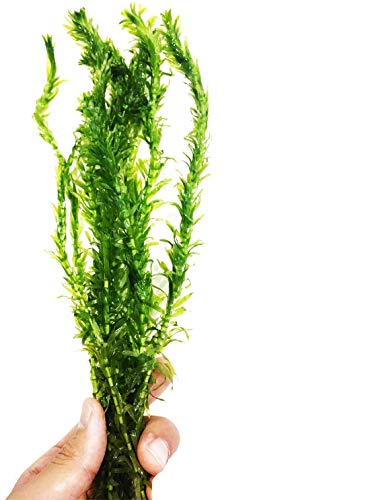
- LIVE AQUARIUM PLANT – 1 bunch imported Elodea Densa. (5+ stems)
Also called Elodea or waterweed, Anacharis is hardy and dependable; ideal for adding instant greenery and cover.
Why it’s great for bettas: Classic, fast-growing stem that tolerates a range of conditions and provides instant cover; helps consume nutrients.
How to plant: Bury stems ~2 inches and space ~1 inch apart for airflow and light penetration. Keep medium light to avoid lanky growth.
Lighting: Medium light is ideal. Too much light without balanced nutrients can spur algae.
Planting: Plant stems ~2 inches deep and ~1 inch apart for good circulation and even growth. Replant trimmed tops for thickness.
| Care Level | Beginner |
| Lighting | Medium |
| Placement | Background |
| pH | 6.5–8.5 |
| Temp | 60–82°F |
| Notes | Regular trimming keeps the hedge thick; too much light can fuel algae. |
Amazon Sword (Echinodorus bleheri)

- Echinodorus bleheri from South America is undemanding and beautiful, and becomes 20-50 cm tall.
- A nutritious bottom promotes growth, but the plant needs pruning to prevent it depriving plants underneath of light.
- Echinodorus bleheri does well even in poorly illuminated aquariums, as it grows towards the light. It is a hardy and easy solitary plant for both beginners and the more experienced with quite large aquariums. It has been sold under the name “Paniculatus”.
In larger tanks, Amazon Sword offers a striking background canopy. It’s hardy, but it does appreciate nutrition at the roots and decent light.
Why it’s great for bettas: Big, dramatic leaves for shelter and shade in larger tanks. Long-lived centerpiece background plant.
How to plant: Plant deep in substrate but keep the crown above the surface. Provide steady nutrients (root tabs) and moderate to strong light.
Lighting: Medium to high light for best leaf size and color. Keep lights on 8–10 hours; use a timer.
Planting: Bury roots deep; keep the crown exposed. Add root tabs under the base every 6–8 weeks.
| Care Level | Intermediate |
| Lighting | Medium–High |
| Placement | Background (larger tanks) |
| pH | 6.5–7.5 |
| Temp | 72–82°F |
| Notes | Sizeable; best beyond ~30 gallons for stress-free maintenance. |
Betta Bulbs (Aponogeton spp.)
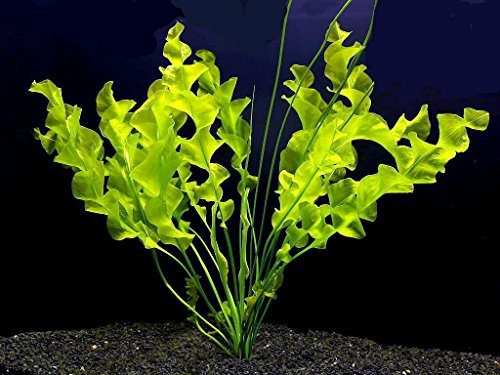
- You will get 1 Madagascar Lace Bulb ready to place in your aquarium. Grows when water temperatures are between 65-72F. PLEASE NOTE THAT THEY WILL NOT GROW IF WATER TEMPERATURE IS OVER 72F.
- The plant will start growing after a week of submerging the bulb
- Grows fast and large in a few weeks under proper conditions
- Make your aquarium stand out with this beautiful and hard to find plant
- Perfect for 10+ gallon aquariums. Not recommended for tanks with temperatures above 72F.
Often hybrid Aponogeton species, “betta bulbs” bring an elegant, flowing midground. They can grow rapidly under strong light, so adjust photoperiod in small tanks.
Why it’s great for bettas: Elegant, wavy leaves and seasonal growth spurts that give a tank fresh movement and canopy.
How to plant: Bury the root end ~2 inches into substrate; keep the bulb’s top accessible. If growth stalls, “rest” the bulb in a cool, damp place for a few weeks.
Lighting: Medium light for steady growth; high light accelerates size (more trimming).
Planting: Bury the rooted end about 2 inches; keep top of bulb accessible. If growth pauses, allow a brief dormancy.
| Care Level | Beginner–Intermediate |
| Lighting | Medium |
| Placement | Mid–Background |
| pH | 6.5–7.5 |
| Temp | 68–82°F |
| Notes | Can have dormancy cycles; reduce light/feeding if growth surges too fast in small tanks. |
How Many Plants Should I Use?
For a standard 5–10 gallon betta tank, a balanced starter set looks like this: 1–2 background stems (Hornwort or Cabomba), 2–3 midground anchors (Anubias/Java Fern tied to wood), 1–2 floaters (Red Root Floaters or Dwarf Water Lettuce), plus 1 foreground cluster (Dwarf Sagittaria or a few Marimo). Keep at least a palm-sized open area at the surface for feeding and breathing.
Live Plants – Pros and Cons
Live plants turn a simple tank into a living ecosystem. They filter water, provide shelter, and encourage natural behavior—yet they also add a little care. Use the detailed list below to decide what fits your routine and goals.
Pros of Live Plants
- Natural Filtration & Stability
- Plants absorb ammonia, nitrite (indirectly), and nitrate, helping keep parameters stable between water changes.
- Leaf surfaces host beneficial bacteria, increasing biofilter capacity—especially helpful in small betta tanks.
- Oxygenation & Gas Balance
- Photosynthesis adds oxygen during the day, improving fish comfort and aiding the biological filter.
- Plants help reduce dissolved CO2 spikes that can stress fish in poorly aerated tanks.
- Behavioral Health & Enrichment
- Broad leaves (e.g., Anubias) act as “hammocks” for resting bettas; dense stems/mosses offer safe hideouts.
- Floating plants soften light and encourage bubble-nesting.
- Algae Competition
- Healthy plant mass outcompetes nuisance algae for nutrients and light when the photoperiod is controlled.
- Aesthetic & Aquascaping Freedom
- Unlimited layouts—jungles, islands, carpets, and canopies—plus natural movement that plastic can’t replicate.
- Microhabitats for a Clean Tank
- Fine roots and moss collect micro-debris for easy siphoning, improving water clarity over time.
Cons of Live Plants
- Maintenance & Learning Curve
- Trimming, thinning floaters, and occasional replanting are required to prevent overgrowth.
- Light scheduling and nutrient balance (liquid fertilizers or root tabs) take a little practice.
- Nighttime Oxygen Use
- Plants respire in the dark and consume oxygen. In heavily planted, low-surface-agitation tanks, add gentle aeration at night or keep some surface clear.
- Algae & “Melt” Risks
- Too much light without nutrients fuels algae; new plants can “melt” while adapting. Most recover with stable care.
- Hitchhikers & Pests
- Unquarantined plants may bring snails, eggs, or planaria. Quick dips/quarantine help prevent this.
- Initial Costs & Supplies
- While budget-friendly options exist, you may add scissors, tweezers, root tabs, and a plug-in timer.
- Surface Coverage Management
- Floaters can blanket the surface and hinder labyrinth breathing if not thinned; keep 20–30% open water.
Pro Tips for Live Plants
- Start simple: Anubias + Java Fern on wood, plus one floater. Add stems later.
- Use a timer: 6–8 hours of light keeps growth steady and algae down.
- Root tabs under heavy root feeders (Amazon Sword, Dwarf Sagittaria) every 6–8 weeks.
- Swish Marimo during water changes and thin floaters weekly.
| Live Plant Factor | What It Means for Bettas | Actionable Tip |
|---|---|---|
| Oxygen day / consume at night | Great daytime O2, but ensure easy surface access overnight | Keep 20–30% surface clear; gentle ripple or sponge filter |
| Growth management | Overgrowth can block light and swim lanes | Trim stems bi-weekly; thin floaters weekly |
| Nutrients | Under-fertilized plants yellow or stunt | All-in-one liquid weekly; tabs under root feeders |
| Pests & algae | Can arrive on new plants or bloom with excess light | Quarantine/dip new plants; reduce photoperiod if algae appears |
Fake Plants – Pros and Cons
Artificial plants can be a smart choice for ultra-low maintenance setups or for keepers who travel often. The key is picking safe materials and arranging them so your betta still feels secure and enriched.
Pros of Fake Plants
- Near-Zero Maintenance
- No fertilizing, trimming, or plant “melt.” Clean during regular tank maintenance and you’re done.
- Predictable Look & Layout
- Shapes and sizes don’t change, so your scape stays exactly as designed—useful for narrow or nano tanks.
- Easy Deep-Cleaning
- Remove, scrub, and replace. Great when treating the tank (medications/salt) that might harm live plants.
- Budget & Time Friendly
- No recurring costs for fertilizers or root tabs; perfect for busy schedules.
- Beginner Confidence
- Lets new aquarists focus on water quality and fish care without plant learning curve.
Cons of Fake Plants
- Risk of Fin Damage (Plastic)
- Hard edges can tear delicate fins. If you go artificial, choose silk plants or test by dragging pantyhose over leaves—if it snags, it can snag fins.
- No Biological Benefits
- They don’t absorb nutrients or support as much biofilm, so they won’t help with nitrate control or oxygenation.
- Detritus Traps
- Textured leaves can collect debris and algae. They’re easy to clean—but need cleaning to stay safe and attractive.
- Less “Natural” Behavior
- Rigid shapes don’t sway or grow, so enrichment is lower versus live plants. Bettas may be less engaged over time.
- Potential Material Concerns
- Very cheap plastics may leach residues if not rinsed; always pre-rinse/soak. Avoid metallic wire cores that can rust.
- Surface Cover Limitations
- Artificial floaters rarely mimic the fine shaded canopy of live floaters that bettas love.
How to Use Fake Plants Safely
- Prefer silk or very soft plastics; avoid sharp or spiky textures.
- Anchor with smooth stones or bury bases to prevent wobble that could startle your betta.
- Mix heights and densities to break sightlines—replicate “thickets” and “clearings.”
- Rinse new plants thoroughly; discard any with exposed metal cores.
| Fake Plant Factor | What It Means for Bettas | Actionable Tip |
|---|---|---|
| Material hardness | Sharp plastic can tear fins | Choose silk or ultra-soft plastic; do the “pantyhose test” |
| No nutrient uptake | Higher reliance on water changes | Maintain weekly changes; keep filter media clean |
| Static shapes | Less enrichment | Use varied sizes, add caves/driftwood for interest |
| Debris buildup | Algae on leaves if neglected | Remove and scrub during routine maintenance |
Quick Decision Guide: If you want the lowest maintenance and are okay with a static look, silk plants are fine. If you want better water quality and natural behavior, go live—or combine both (see below).
Best of Both Worlds (Hybrid Approach)
Plenty of betta keepers mix live and artificial plants: anchor the scape with live epiphytes (Anubias/Java Fern) and floaters for shade, then fill any gaps with a few silk pieces for instant density. You’ll get natural filtration and enrichment plus a predictable, full look with minimal extra work.
- Starter Hybrid: 2× Anubias on wood + 1× Java Fern + a handful of Red Root Floaters, then 2–3 silk bunches to round out the mid/background.
- Maintenance: 6–8 hour light timer, weekly 25–30% water change, thin floaters, quick scrub of silk plants if algae appears.
Essential Setup & Care Tips (Beginner-Friendly)
Substrate
Most starter plants do fine in standard aquarium gravel or sand. Root feeders (Amazon Sword, Dwarf Sagittaria, Aponogeton) appreciate nutrient-rich substrate or root tabs in inert gravel.
Lighting
Low–medium light (6–8 hours) works for the picks above. Too much light without nutrients invites algae; use a timer for consistency.
Fertilizers
Use a comprehensive liquid fertilizer weekly for stems/epiphytes. Add root tabs beneath heavy root feeders every 6–8 weeks. CO2 is optional.
Planting Techniques
- Anubias & Java Fern: Rhizome plants—tie to wood/rock; don’t bury the rhizome.
- Stems (Anacharis, Cabomba, Hornwort): Plant in small groups with spacing; replant trimmed tops to thicken.
- Floaters (Red Root Floaters, Dwarf Water Lettuce): Keep an open lane at the surface; reduce flow to prevent dunking.
- Moss & Marimo: Tie moss to décor; place Marimo on substrate and swish during water changes.
Equipment & Flow
Bettas prefer gentle flow. Use a sponge filter or baffle HOB outputs so floaters don’t get submerged. If using a 15-gallon setup, the Fluval Flex 15 Gallon offers built-in filtration and lighting that suits many low–medium light plants.
Placement Blueprint (Fast Layout Guide)
- Background: Hornwort, Cabomba, Amazon Sword (larger tanks).
- Midground: Anubias, Java Fern, Aponogeton (betta bulbs) on wood/rock.
- Foreground/Carpet: Dwarf Sagittaria clumps + Marimo accents.
- Surface: Red Root Floaters and/or Dwarf Water Lettuce. Keep 20–30% of the surface clear.
Care Schedules (Set & Forget)
- Weekly: 25–30% water change, roll/clean Marimo, dose all-in-one fertilizer, thin floaters.
- Bi-weekly: Trim stems and replant tops; vacuum detritus around moss and grass.
- Every 6–8 weeks: Refresh root tabs under heavy root feeders.
- Daily glance: Check that floaters aren’t covering the entire surface and that your betta can access air easily.
Troubleshooting (Quick Fixes)
- Yellowing leaves: Add a balanced liquid fertilizer; confirm your light runs ~6–8 hours.
- Algae on leaves: Shorten photoperiod by 1 hour; thin floaters; improve nutrient balance.
- Floaters melting: Reduce surface turbulence; keep leaves dry (avoid splashy outflows).
- Stems getting leggy: Increase light slightly; top and replant trimmings.
- Betta gulping at surface often: Ensure some surface agitation and avoid 100% floater coverage.
FAQs: Best Plants for Betta Fish
What are the easiest live plants for a betta fish?
Anubias Nana, Java Fern, Marimo Moss Balls, and Java Moss are the simplest. They tolerate low light and don’t require specialized substrates or CO2.
Do betta fish need live plants?
No, but live plants offer big benefits: lower stress, natural filtration, hiding places, and enrichment. Bettas behave more naturally in planted tanks.
Can I have a betta in a tank without plants?
Yes. If you skip live plants, use silk plants instead of hard plastic to avoid fin tears, and add décor to break sightlines.
How many plants should I put in my betta tank?
For 5–10 gallons, aim for 6–10 total plants: 2–3 midground epiphytes (Anubias/Java Fern), 1–2 floaters, 1 foreground cluster (Dwarf Sagittaria/Marimo), and 1–2 background stems (Hornwort/Cabomba). Keep 20–30% of the surface open.
Are moss balls good for betta fish?
Yes—Marimo are safe, low maintenance, and add enrichment. Rinse and roll them during water changes to maintain shape and cleanliness.
What floating plants do bettas like?
Red Root Floaters and Dwarf Water Lettuce are top choices. They soften light, offer roots to explore, and can encourage bubble-nesting. Just thin regularly.
Final Tips (You’ve Got This!)
- Use a timer for consistent lighting (6–8 hours to start).
- Combine epiphytes + floaters for instant success; add stems/grasses as you gain confidence.
- Root tabs under heavy root feeders; liquid fertilizer weekly for everything else.
- Keep a clear feeding/air lane at the surface for your betta.
Want deeper reading on substrates and plant care? See this primer: Live Plants for Bettas (overview).
Happy planting and enjoy watching your betta thrive in a living aquascape!