
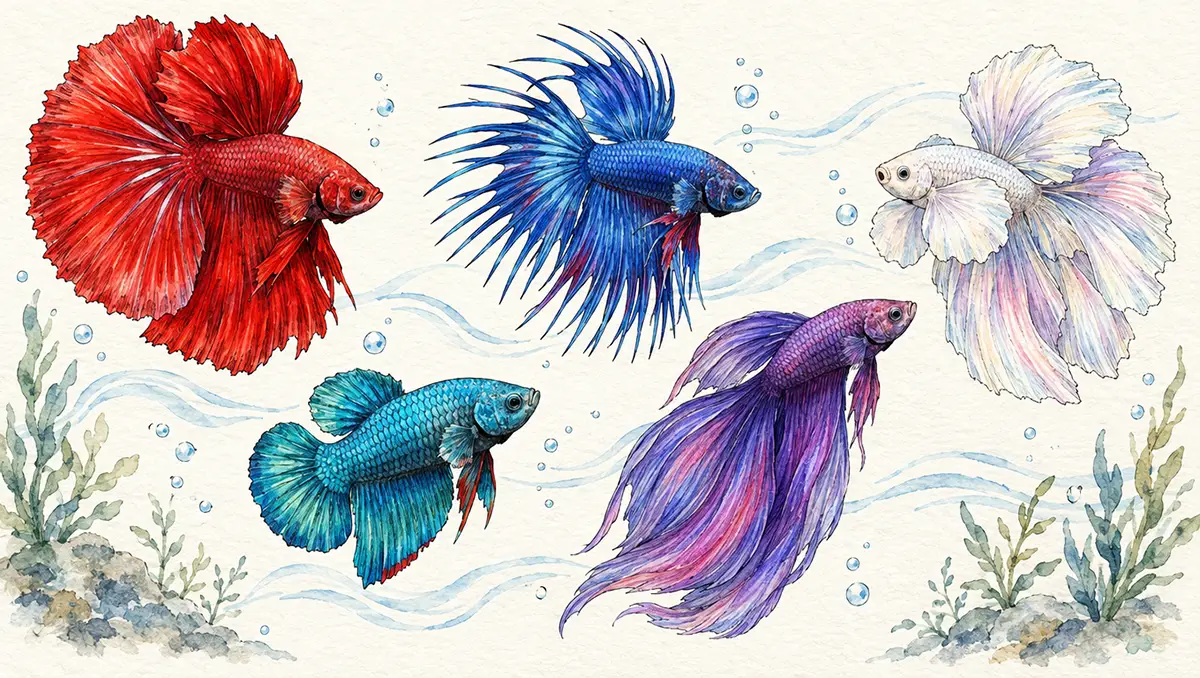
Walk past the betta shelf at any chain pet store and you’ll see a row of cups labeled “Delta,” “Halfmoon,” “Crowntail.” Those labels matter less than you’d think: many of those fish are juveniles whose fins are still growing. And they matter more: fin shape decides how your betta swims, what tank he needs, and which problems to watch for.
A betta’s “type” describes four separate things: the shape of the tail, how much webbing sits between the fin rays, whether there’s one tail or two, and the size of the pectoral fins. Color is a different question entirely. Because these traits mix freely, one fish can be a “dumbo halfmoon plakat.”
Why One Species Comes in So Many Shapes
Every fancy betta in the trade is Betta splendens. Thai breeders were selecting them for fighting as early as the 14th century, and breeding for looks only took off in the early 20th century, according to a 2022 genome study in Science Advances (Kwon et al.). The wild ancestors were short-finned. Every flowing tail you see today came later, through human selection.
That team sequenced 98 wild and ornamental fish. Most of the genes breeders selected act on a single body region, either the color of one part or the shape of one fin, and most are inherited independently. The authors call it “a Lego-like genetic logic.” Other teams have since tied single traits to single genes: kcnh8 is the leading candidate for elephant-ear pectorals (Wang et al., 2021), and long fins map to kcnj15 (Zhang et al., 2022, 727 fish sequenced). For you, this means tail shape, fin length, tail count and pectoral size are separate building blocks. Once you see that, betta names stop looking like word salad.
Betta Tail Types at a Glance
| Form | How to recognize it | Care notes |
|---|---|---|
| Halfmoon | Tail flares to a full 180° “D” | Heavy fins: low flow, smooth decor |
| Over-halfmoon | Spread beyond 180° | As halfmoon, or more so |
| Super delta | Wide fan, short of 180° | As halfmoon |
| Delta | Narrow, straight-edged triangle | Moderate |
| Veiltail | Long tail drooping downward | Moderate; the classic chain-store fish |
| Crowntail | Webbing cut back, rays stick out as spikes | Ray tips snag on rough decor |
| Combtail / half-sun | Rays poke just past the webbing | Moderate |
| Plakat | Short fins, compact body | Strong swimmer; easiest to keep |
| Doubletail | Two tail lobes, wide dorsal, short body | Watch buoyancy and swimming |
| Dumbo / elephant ear | Oversized pectorals (sits on any tail) | Pectorals tear easily |
| Roundtail | Rounded fan, no straight edges | Easy; rare in stores |
| Spadetail | Tail narrows to a single point | Easy; rare in stores |
| Rosetail / feathertail | Over-branched rays, ruffled edges | Highest maintenance; see below |
Halfmoon, Super Delta and Delta
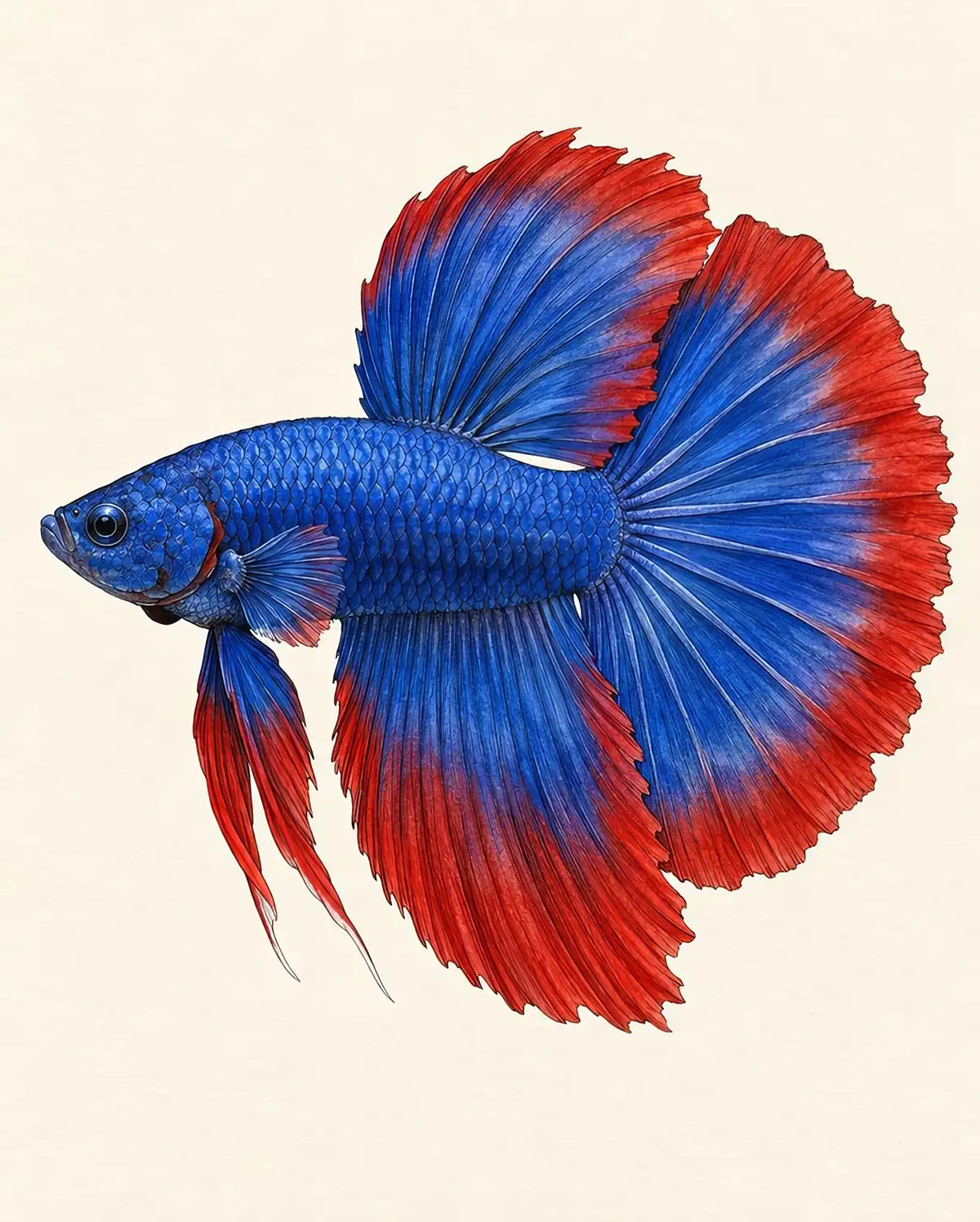
At full flare, a halfmoon opens his tail into a capital D: a 180° spread, with the dorsal and anal fins overlapping its edges. When the spread goes past 180°, breeders call it an over-halfmoon (OHM).
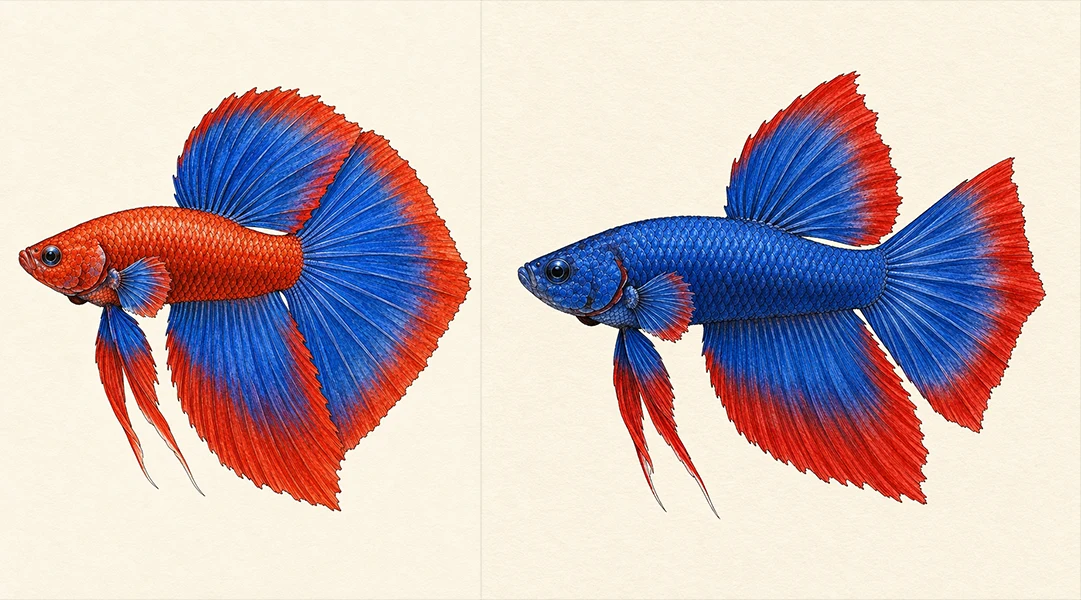
The delta is a narrower, straight-edged triangle. The super delta sits in between. Hobby sources put it around 120-160° of spread, but there’s no official cutoff, so two experienced keepers can look at the same fish and disagree.
To tell them apart, only measure at full flare, because a relaxed halfmoon looks like a delta. Show him a mirror briefly (a minute at most; longer is just stress), take a side-on photo, and check the angle with a free protractor app.
And don’t take the cup label as gospel. Stores get tail types wrong all the time, in both directions, for two boring reasons. Most bettas are sold as juveniles, before their fins have finished growing, so whoever labels the cup is making an educated guess. And lids get swapped when cups are restocked or shuffled on the shelf. The result is a “delta” that grows into a halfmoon, a “halfmoon” that never gets past a triangle, or a short-finned “male” that turns out to be a female plakat. One of our team learned this the expensive way:
“When I was starting out, I paid extra for a chain-store fish whose lid read ‘Premium Male Halfmoon Betta.’ I wanted that full 180° fan. Once he’d settled in, I got him to flare at a mirror for the first time, and his tail stopped short: a sharp triangle, not a half-circle. I posted photos on a forum to check whether his fins were clamped or I was doing something wrong. The answer came fast: ‘The lid says halfmoon, but he was mislabeled. You’ve got a delta.’ They told me it happens constantly, either because the fish are too young to identify when they’re packed or because lids get swapped at the store. I felt a bit cheated by the price, but he turned out healthy and full of personality, so I kept him. It taught me early that a betta’s form is set by his genes, not by a sticker on a cup.”
If the exact tail shape matters to you, ask to see the fish flare before you pay, and judge the spread rather than the label. Paying a true premium? Buy from a breeder who photographs the actual fish at full flare, not a stock picture of his siblings.
Whatever the label says, a halfmoon’s fins are heavy. He tires in current and rests a lot. Run a sponge filter or baffle the outflow, and give him a resting spot near the surface, like a betta hammock or a broad plant leaf. If he spends his day wedged in a corner, resting on the bottom, or getting pushed around near the filter, the flow is too strong.
Crowntail and Combtail (Including Half-Sun)
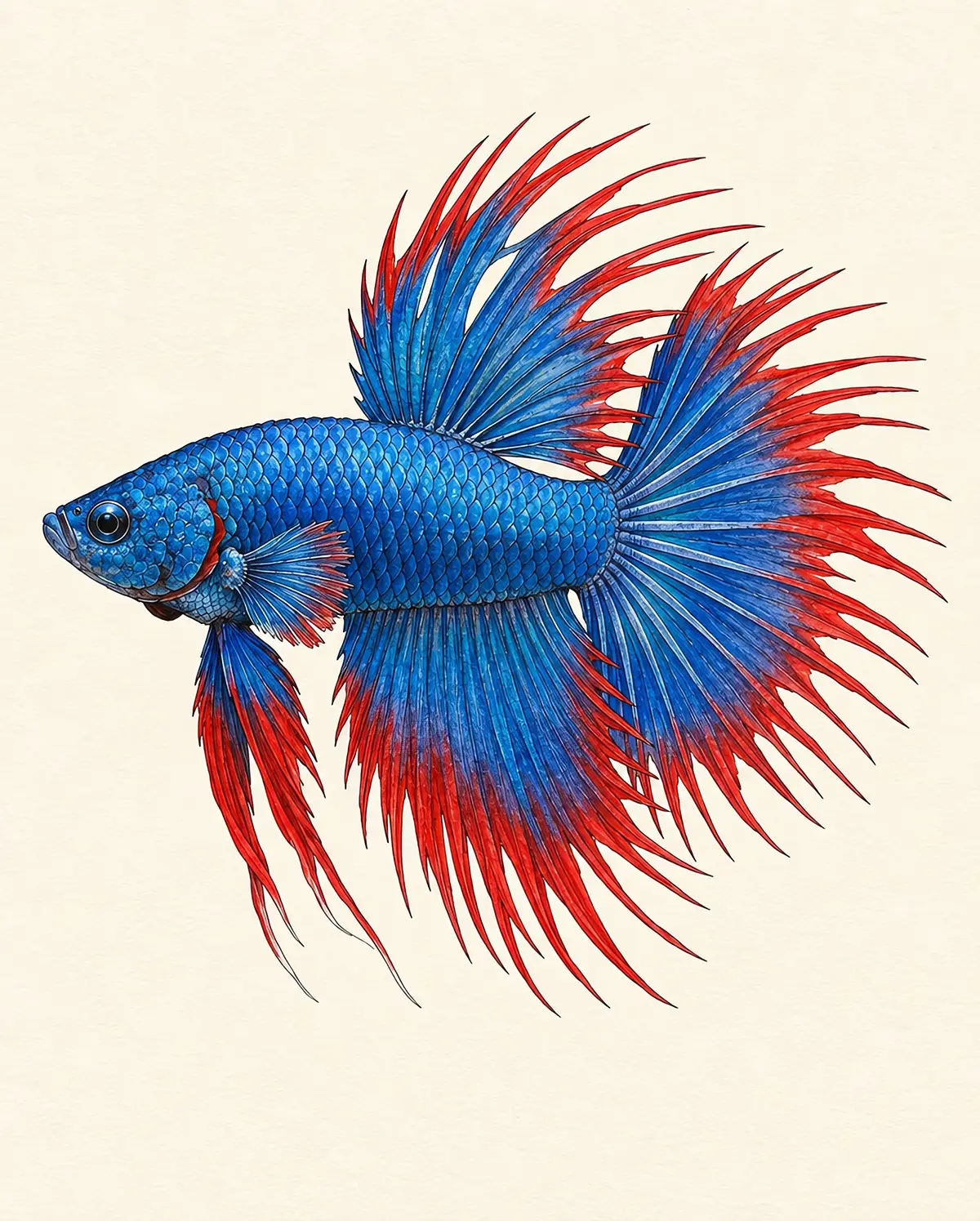
On a crowntail, the webbing is cut back so far that the rays stand out as spikes. The IBC standard requires at least a 33% reduction of webbing versus ray length in each of the dorsal, anal and caudal fins. Rays can be single, double or crossed. Broken tips are slow to regrow, so run the pantyhose test on every decoration: if it snags a stocking, it will snag a crowntail.
A combtail has much less reduction: the rays poke just past the fin edge, like the teeth of a comb. A half-sun is a combtail with a halfmoon’s spread, usually bred from a halfmoon × crowntail cross. Quick rule: if the gaps between the rays reach a third of the way into the fin or deeper, it’s a crowntail. Shallow teeth make it a combtail, and shallow teeth on a wide D make it a half-sun.
Plakat: The Original Fighter
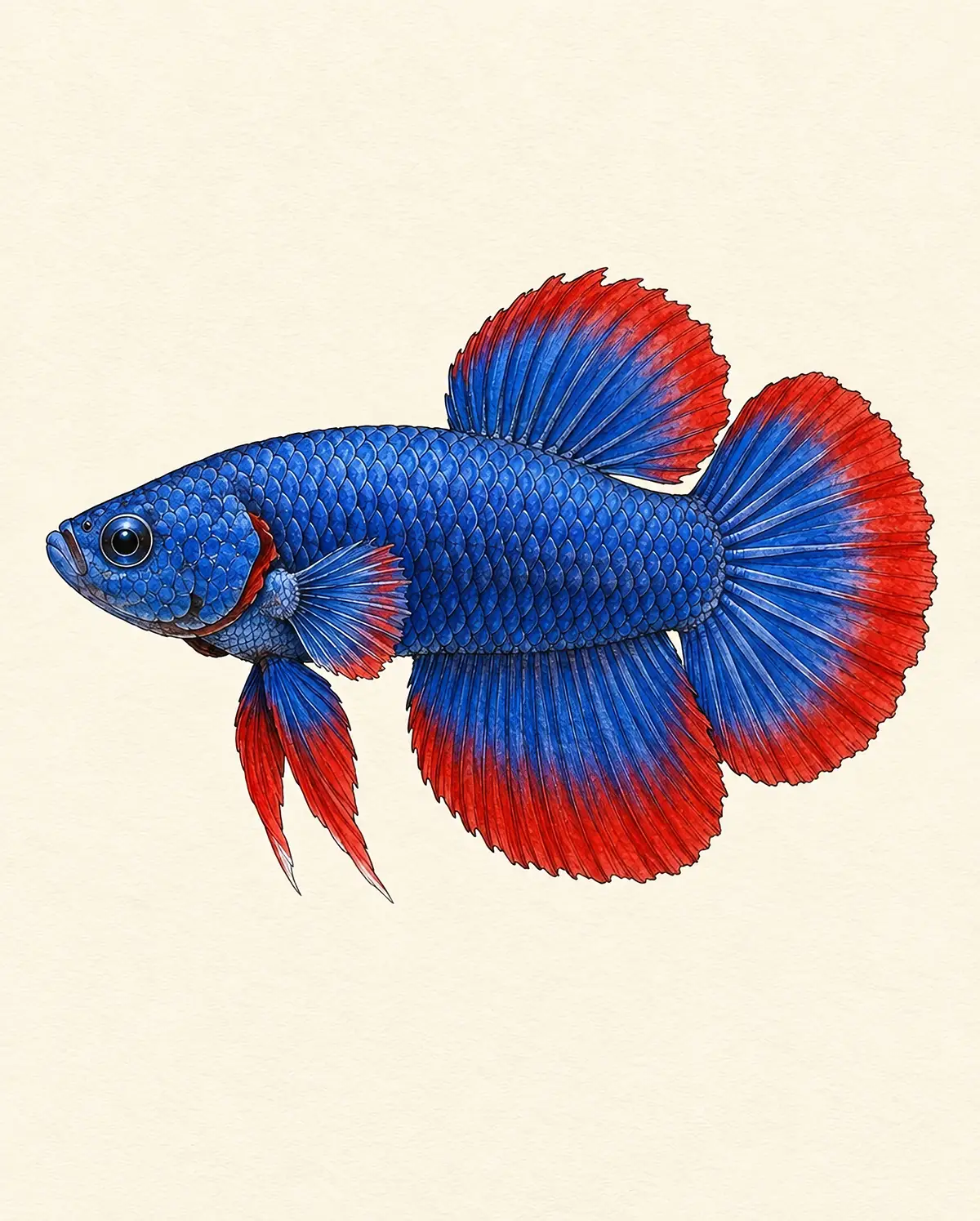
Short fins, a muscular body and a compact tail: the plakat is the closest look to the fighting fish Thai breeders worked with centuries before anyone wanted a flowing tail. The IBC recognizes three plakat classes. The traditional plakat has a rounded or spade-like tail. The show plakat, which the hobby calls the halfmoon plakat or HMPK, has a crisp D outline on short fins. The giant is bred for size; Aquarium Co-Op cites a male body length over 2.5 inches.
Want a betta that actually swims laps? Get a plakat. They handle more current than longfins and rarely bite their own fins. Their “more aggressive” reputation comes from their fighting history, but temperament varies far more from one fish to the next than between forms.
Plakat male or female? This is the number one mix-up, because females have short fins too. Look for the egg spot (ovipositor), a small white dot between the ventral fins of adult females. Males usually have longer, more pointed ventrals, and their anal fin often ends in a point toward the tail. With juveniles, give it a few weeks before you decide.
Veiltail
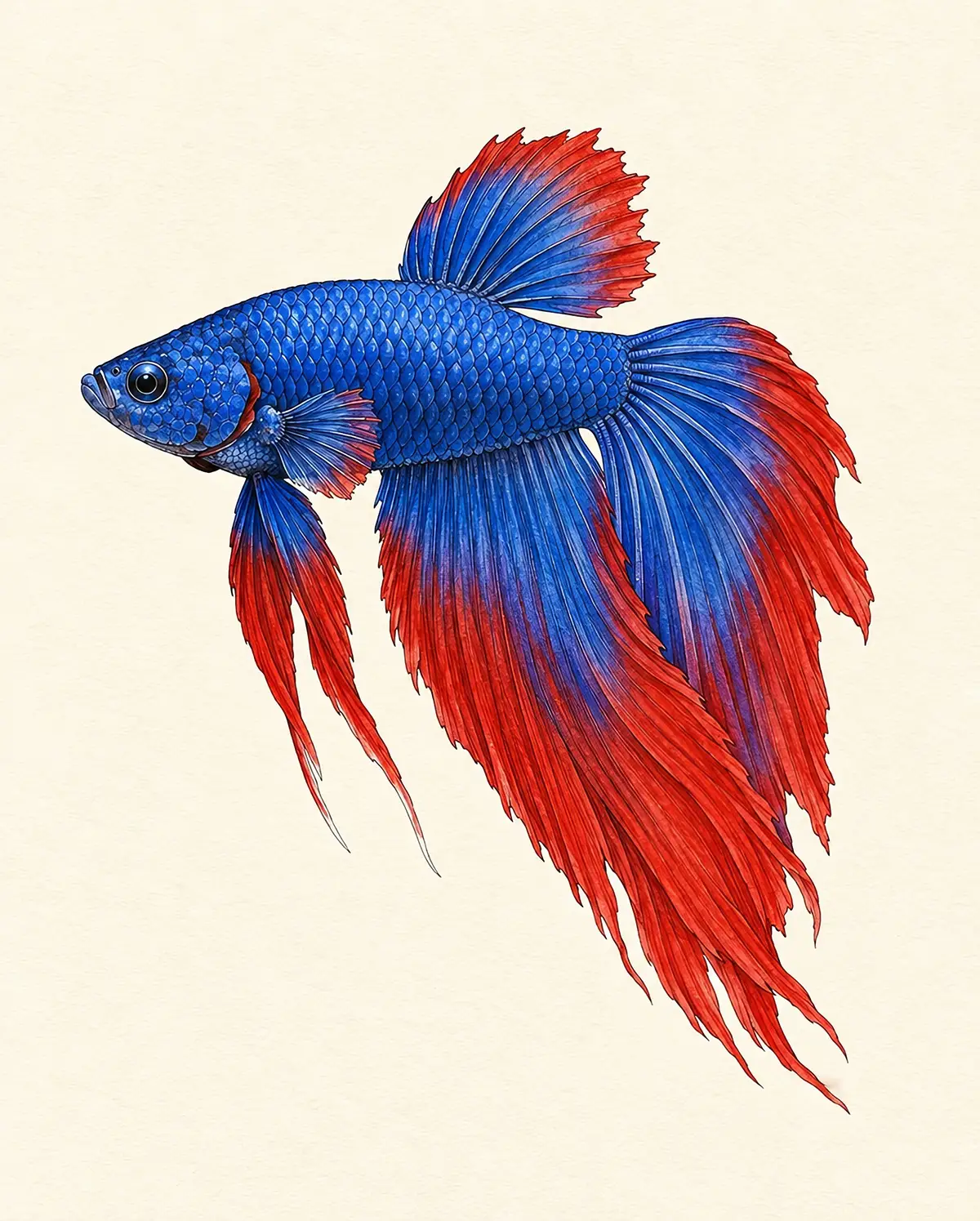
The veiltail is the cheapest longfin on chain-store shelves, and it still has its own IBC class. The tail is long and droops, so its top and bottom aren’t symmetrical, and the dorsal fin is narrow and curved like a blade. Veiltail or delta? At full flare, a delta is a symmetrical triangle, while a veiltail still sags, with its longest point toward the bottom.
Doubletail
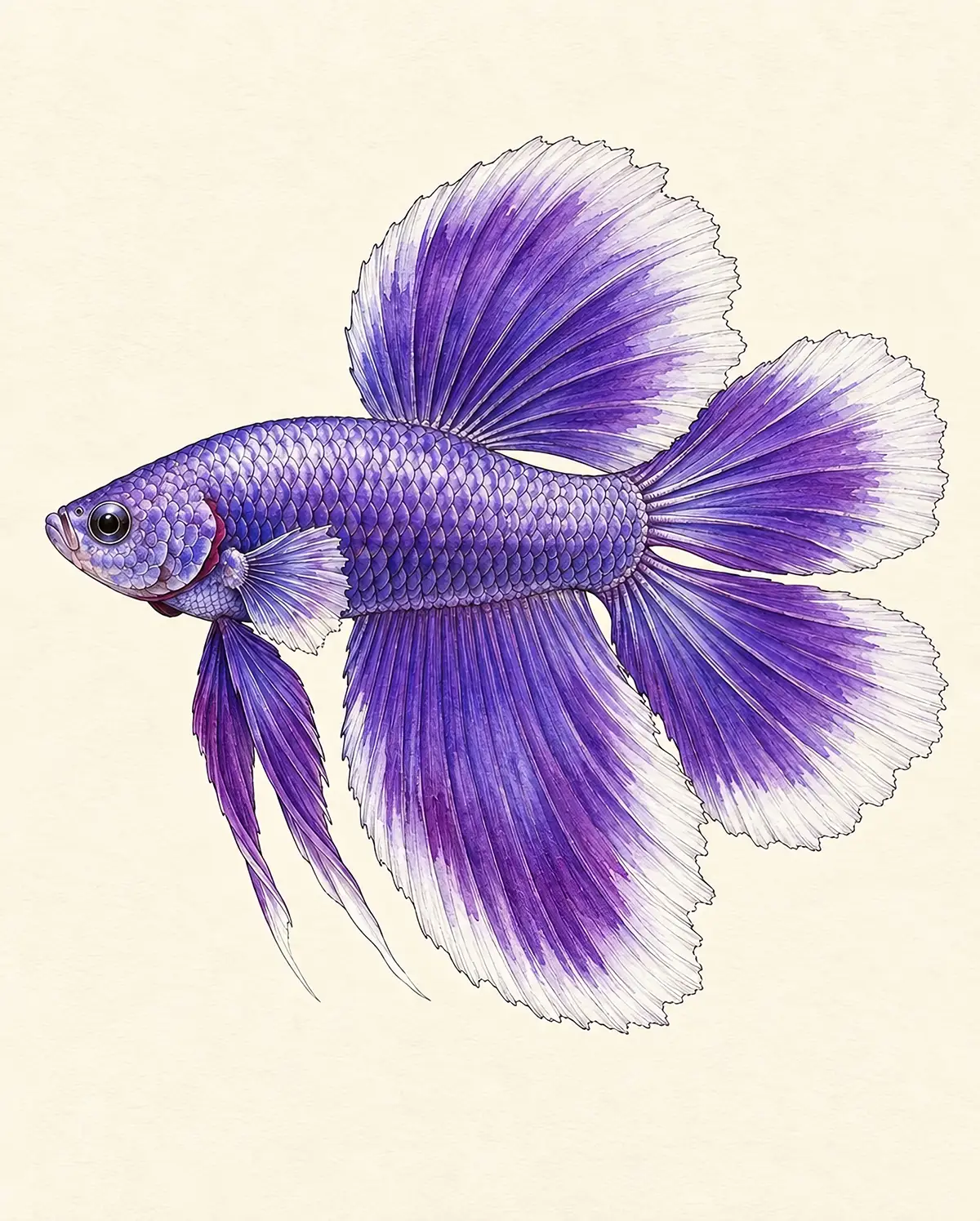
A doubletail has two separate caudal lobes, a shorter body, and a dorsal fin nearly as wide as the anal fin. The trait is recessive, so both parents must carry it. Breeders often note that single-tailed carriers show a wider-than-normal dorsal.
That compressed body has a cost: breeders report more swim bladder and spinal (“short body”) problems in doubletails. It’s not a death sentence, and the IBC has both longfin and shortfin doubletail classes. Still, watch him swim before you buy. He should hold his position in the water without tilting or sinking.
Dumbo (Elephant Ear)
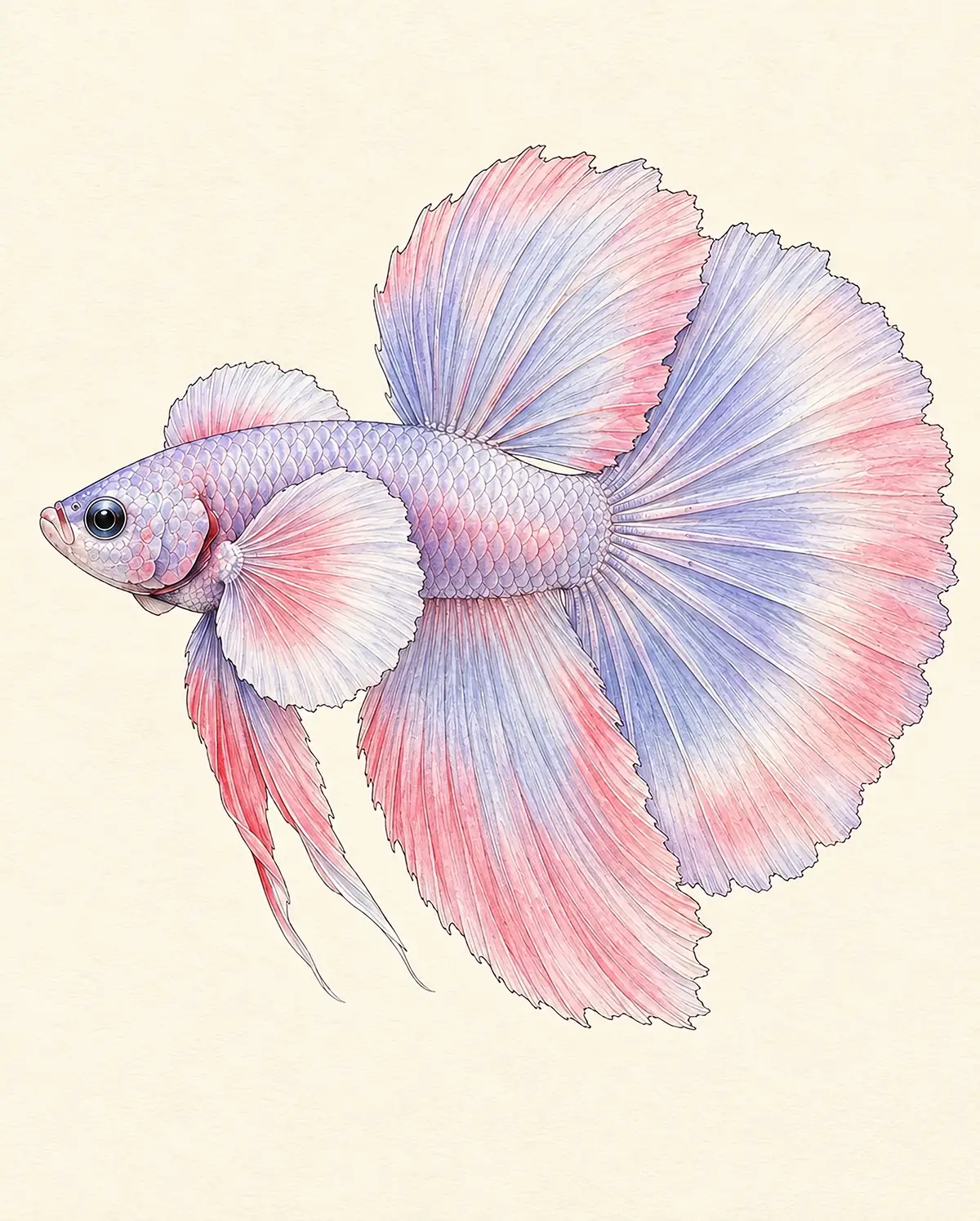
Dumbo isn’t a tail type. It describes the pectoral fins, the pair just behind the gills, which grow huge and wing-like. Because it’s a separate building block, it sits on top of any tail: dumbo halfmoon, dumbo plakat, and so on. The IBC judges these fish in its Large Pectoral class. Those big pectorals split easily, so remove sharp decor and keep the water clean so nicks heal fast. A small tear that’s closing is nothing to panic about.
Roundtail and Spadetail
The roundtail has a tail like an open fan, with no straight edges. The spadetail has a wide base that narrows to a single point, like the spade on a playing card. You’ll rarely find either sold under these names; most end up as unlabeled “regular” bettas. Both are robust, easy forms.
Rosetail and Feathertail: Beautiful, With Caveats
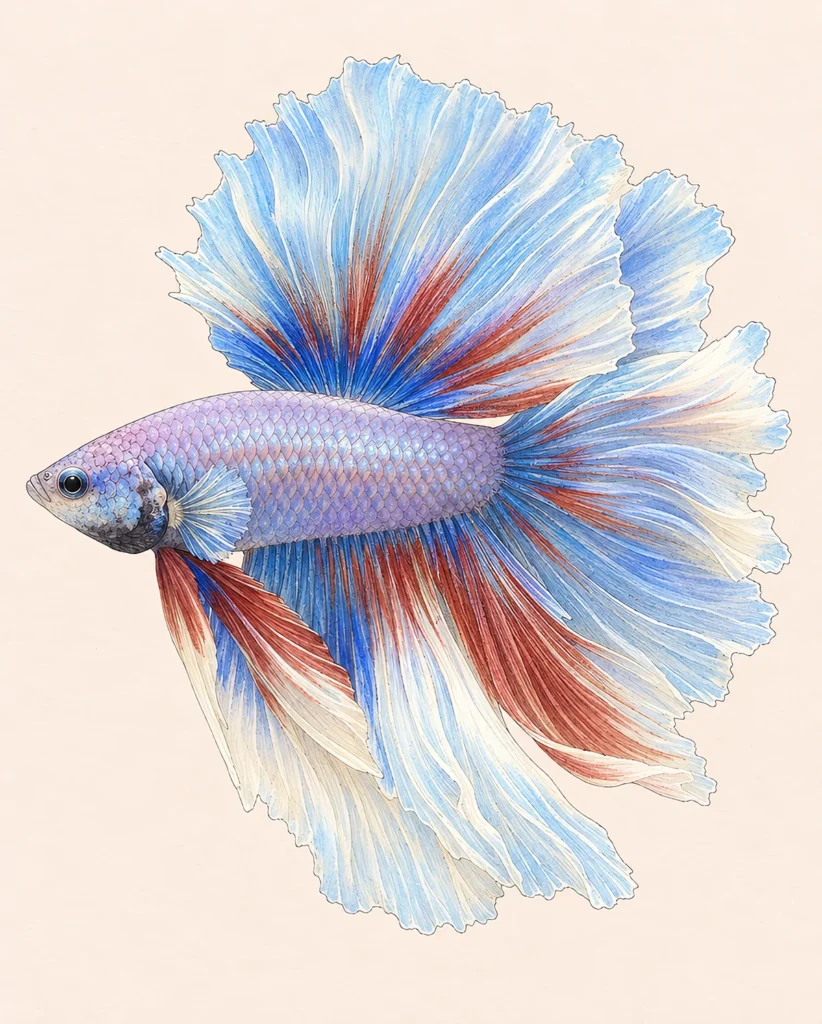
Push a halfmoon’s ray branching to the extreme and the fin folds over itself like rose petals: that’s a rosetail. Push it further, until the edges look ragged, and you get a feathertail. These aren’t separate forms, just halfmoons with excessive branching.
We looked, and no controlled study measures rosetail lifespan. But breeders and forum regulars report the same problems again and again: heavy fins that exhaust the fish, broken rays, collapsing fins, and more tail biting. A rosetail with a solid body and fins in proportion often does fine. A thin fish dragging fins three times his body length is the one to skip.
Already have one? Give him very low flow, several resting spots near the surface, smooth decor, live plants and a stable temperature. If his fins suddenly look shorter, compare them with last week’s photo. Clean, bitten-looking cuts mean tail biting. Dark, melting edges mean fin rot, so test your water first.
How to Read a Betta’s Full Name
Because the traits stack like Lego, a breeder’s listing reads like a sentence: color/pattern + modifiers + tail type + fin length. A few examples:
- Halfmoon plakat (HMPK): halfmoon outline, short fins.
- Dumbo halfmoon: halfmoon tail plus oversized pectorals.
- Doubletail plakat: two tail lobes, short fins.
- Koi galaxy HMPK dumbo: a pattern, a trade name, a form and a modifier on one fish.
Word order doesn’t change the fish: “Dumbo HMPK” and “HMPK Dumbo” mean the same thing. What matters is that each word names a trait you can check on the fish in front of you.
What about color? Fin form and color are separate, so a koi betta can be a plakat or a halfmoon. For colors, patterns and scale types, see our illustrated guide to betta fish colors and patterns, or grab our printable 14-plate Betta Varieties Guide.
What Other Betta Keepers Ask Most
One post title shows up on r/bettafish over and over: “Halfmoon or delta?” The answers rarely change: you can’t tell from a relaxed fish, so post a photo at full flare. Several keepers describe the mirror image of our teammate’s story: a “delta” whose fins kept growing until he was clearly a halfmoon.
Close behind: “Is my plakat male or female?” Shops mislabel short-finned fish in both directions, and the community answer is always the egg spot. The heated threads are about welfare, asking whether dumbos or rosetails are “healthy.” Most owners say their fish do well with low flow and smooth decor, while breeders are more cautious about extreme branching. Our view: the more extreme the fins, the more careful your setup needs to be.
