

Last Updated on 2024-10-18
Keeping fish is a wonderful hobby, but choosing compatible tank mates can be tricky. One popular question among aquarists is, “Can Pygmy Corydoras and Bettas live together?” These two species are both fascinating in their own right, but combining them in one tank isn’t as straightforward as it seems. It requires careful consideration of their needs, behaviors, and tank setup.
This guide will take you through everything you need to know about housing Pygmy Corydoras with Betta fish. We’ll cover their compatibility, how to create the perfect environment, feeding tips, and how to handle potential challenges. By the end, you’ll have all the knowledge you need to create a harmonious home for both these wonderful species.
Comparison Between Pgmy Corydoras and Bettas
Here’s a detailed table comparing Pygmy Corydoras and Betta fish:
| Pygmy Corydoras | Betta Fish | |
|---|---|---|
| Appearance | Pygmy Corydoras have small, silver bodies with a horizontal black stripe running from their nose to their tail. They are tiny, reaching about 1 inch (2.5 cm) in length, with a rounded shape and short fins. | Bettas are vividly colored with long, flowing fins. They come in various shades like red, blue, purple, and white, with unique patterns such as marbled, spotted, or solid colors. They typically grow up to 3 inches (7.5 cm). |
| Life Expectancy | With proper care, Pygmy Corydoras can live 3 to 5 years. Factors like a stable, clean environment and a balanced diet can extend their lifespan. | Bettas usually live 3 to 5 years in optimal conditions. High-quality care, including a clean environment, proper diet, and stress-free living, can maximize their life expectancy. |
| Behavior | Pygmy Corydoras are peaceful, social fish that thrive in groups of six or more. They are active bottom-dwellers, often seen foraging or darting around in small bursts. | Bettas have a more aggressive and territorial nature, especially males. They are generally solitary and prefer swimming at the top or middle levels. However, they can coexist with peaceful, non-threatening species like Pygmy Corydoras. |
| Geographic Location | Native to the Amazon Basin in South America, specifically Brazil and Peru. They inhabit slow-moving rivers and streams with sandy or muddy bottoms. | Bettas originate from Southeast Asia (Thailand, Cambodia, Vietnam, Malaysia). They are found in rice paddies, slow-moving streams, and shallow waters. |
| Temperature Range | 72-79°F (22-26°C) – Pygmy Corydoras prefer slightly cooler water but can adapt to warmer temperatures suitable for Bettas. | 75-82°F (24-28°C) – Bettas thrive in warmer water, which is also within the acceptable range for Pygmy Corydoras. |
| pH Levels | 6.0-7.5 (slightly acidic to neutral) – They prefer softer water with low to moderate pH. | 6.5-7.5 (slightly acidic to neutral) – Bettas are comfortable with a similar pH range, making water compatibility easier. |
| Water Hardness | Soft to moderately hard – They do best in soft water conditions but are adaptable to slightly harder water. | Soft to moderately hard – Bettas are adaptable and can handle a range of hardness levels, similar to Pygmy Corydoras. |
| Water Flow | Low to moderate – Pygmy Corydoras prefer gentle water flow as they are small and delicate swimmers. | Low to moderate – Bettas prefer calm water, as strong currents can damage their long fins or cause stress. |
| Common Plants | Java Fern, Anubias, Amazon Sword, and Cryptocoryne – These plants provide plenty of hiding spaces and mimic their natural habitat. | Bettas love plants like Java Fern, Anubias, Floating Water Lettuce, and Amazon Frogbit, which offer cover and shade. |
| Additional Shelter | Driftwood, smooth rocks, caves, and leaf litter – These elements provide hiding places and allow Corydoras to explore and feel secure. | Driftwood, Betta hammocks, floating plants, and small caves – Bettas appreciate these for resting and hiding, especially near the water’s surface. |
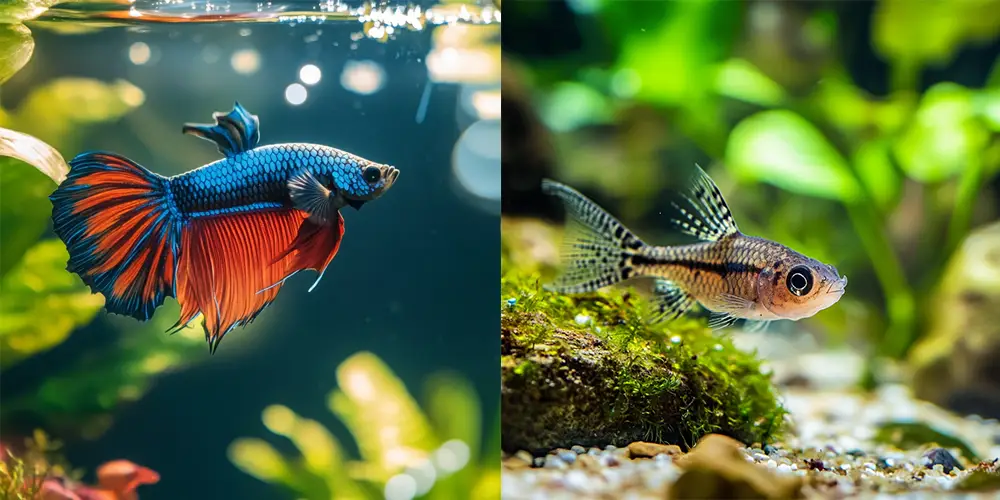
Pygmy Corydoras: Tiny, Peaceful Bottom-Dwellers
Pygmy Corydoras (Corydoras pygmaeus) are small, peaceful catfish that add life to the bottom of your aquarium. They are known for their gentle nature and active behavior.
- Size: These fish are tiny, growing to just about 1 inch (2.5 cm) in length.
- Appearance: Pygmy Corydoras have silver bodies with a horizontal black stripe running from the nose to the tail.
- Behavior: They’re highly social and prefer to live in groups of six or more. They’re constantly moving, exploring the tank, and foraging at the bottom.
- Water requirements: Pygmy Corydoras thrive in water temperatures between 72-79°F and a pH range of 6.0-7.5.
Betta Fish: The Stunning, Solitary Beauty
Betta fish (Betta splendens), also known as Siamese Fighting Fish, are popular for their vibrant colors and flowing fins. They’re famous for their territorial and sometimes aggressive nature.
- Size: Bettas are larger than Pygmy Corydoras, growing up to 3 inches (7.5 cm) in length.
- Appearance: Betta fish come in a variety of colors, including red, blue, purple, and white, with long, beautiful fins.
- Behavior: Bettas are territorial and can be aggressive, especially towards other Betta males or fish with flashy fins. They prefer to swim alone and usually occupy the upper and middle levels of the tank.
- Water requirements: Bettas thrive in water temperatures of 75-82°F and a pH range of 6.5-7.5.
Compatibility: Can Pygmy Corydoras and Bettas Coexist?
The answer is yes, but with some important considerations. Here’s why they can be compatible, along with the potential challenges:
1. Different Tank Zones
One of the main reasons why Pygmy Corydoras and Betta fish can coexist is that they occupy different zones in the tank. Bettas spend most of their time swimming near the top and middle of the tank, while Pygmy Corydoras are bottom-dwellers. This separation reduces the chances of direct conflict.
- Benefit: Less competition for space, which minimizes stress.
- Challenge: If the Betta decides to explore the bottom, it might still show curiosity or aggression towards the Corydoras.
2. Peaceful Nature of Pygmy Corydoras
Pygmy Corydoras are incredibly peaceful. They’re not aggressive and won’t harass the Betta. This behavior makes them ideal tank mates because they won’t challenge or provoke the Betta.
- Benefit: Less chance of conflict.
- Challenge: If the Betta is particularly aggressive, it may still chase or nip at the Corydoras.
3. Size Difference
Since Pygmy Corydoras are so small, they’re not seen as a threat by most Betta fish. The Betta’s territorial nature is often triggered by fish that are of similar size or have flowing fins. Luckily, Corydoras don’t fit this description.
- Benefit: Bettas are less likely to view Pygmy Corydoras as competition.
- Challenge: If the Betta is very aggressive, it might mistake the small Corydoras for prey or react defensively.
4. Group Living
Pygmy Corydoras are schooling fish and need to be kept in groups of at least six. This makes them more confident and active. A solitary Corydoras might become stressed and more vulnerable to harassment by a Betta.
- Benefit: In a group, Pygmy Corydoras are more confident and less likely to trigger aggressive behavior from the Betta.
- Challenge: More fish mean more activity, which might occasionally annoy a Betta that prefers a quieter environment.
Setting Up the Perfect Tank for Pygmy Corydoras and Betta
To ensure a harmonious environment, the tank setup plays a critical role. Here’s how to create the perfect home for both species:
1. Tank Size
- Minimum size: A 10-gallon tank is the absolute minimum for housing a Betta and a group of Pygmy Corydoras. However, a 20-gallon tank is even better.
- Why size matters: More space reduces stress and aggression. It also gives each species plenty of room to explore without running into each other.
2. Substrate
- Recommendation: Use a soft, sandy substrate. Pygmy Corydoras love to dig and forage, and sand protects their delicate barbels. Gravel can be sharp and cause injuries.
- Benefit: The Betta also appreciates a soft substrate, as it’s easier on their delicate fins.
3. Plants and Decorations
- Live plants: Add plenty of live plants like Java Fern, Anubias, or Amazon Sword. These provide hiding spots for both species and make the tank feel more natural.
- Hiding spots: Include caves, driftwood, or decorations that offer hiding places, especially for the Pygmy Corydoras. This helps them feel safe and reduces the chance of Betta aggression.
- Floating plants: Bettas love floating plants like Water Lettuce or Frogbit. These plants create shaded areas and make Bettas feel secure.
4. Water Conditions
- Temperature: Maintain a temperature range of 75-78°F. This range suits both species well.
- pH levels: Keep the pH around 6.5-7.5. Both Bettas and Pygmy Corydoras thrive in this range.
- Water quality: Bettas are sensitive to poor water quality, and Pygmy Corydoras are no different. Use a gentle filter to maintain clean water, but avoid strong currents, as both species prefer calm waters.
Feeding Both Pygmy Corydoras and Betta Together
Feeding two different species can be challenging, especially when one is a slow eater. Here’s how to ensure both your Pygmy Corydoras and Betta get the nutrition they need:
1. Diet
- Pygmy Corydoras: These fish are omnivores and love sinking pellets, algae wafers, and frozen or live foods like bloodworms and brine shrimp.
- Betta Fish: Bettas are carnivores. They prefer high-protein foods like Betta pellets, frozen or live bloodworms, brine shrimp, and daphnia.
2. Feeding Strategies
- Use sinking food for Corydoras: Pygmy Corydoras feed at the bottom, so use sinking pellets or wafers that fall quickly. This ensures they get their share before the Betta can snatch it up.
- Feed Bettas at the surface: Bettas are surface feeders. Place their food at the top of the tank, so they don’t compete with the Corydoras.
- Feed in different areas: Drop food in different areas of the tank to prevent competition. This way, the Betta focuses on its food while the Corydoras eat peacefully below.
Potential Challenges and How to Handle Them
Although Pygmy Corydoras and Bettas can live together, there might still be a few bumps along the way. Here’s how to tackle common issues:
1. Aggression from the Betta
- Problem: Bettas can be unpredictable. Some may flare up or chase the Corydoras, especially if they’re in a bad mood.
- Solution: If you notice aggression, add more hiding spots or plants. This creates more barriers and reduces direct contact. If the aggression continues, consider separating them into different tanks.
2. Overfeeding and Food Competition
- Problem: Bettas can be greedy eaters and might try to eat everything, leaving nothing for the Corydoras.
- Solution: Feed the Betta first, and then drop the Corydoras’ food in afterward. You can also use a feeding dish or place the food directly on the substrate for the Corydoras.
3. Water Quality Issues
- Problem: A tank with multiple species can quickly accumulate waste, leading to poor water quality.
- Solution: Perform regular water changes (about 25% weekly) and ensure you have a good filtration system. Test the water regularly to maintain safe parameters.
Tips for a Happy and Peaceful Community Tank
Here are some final tips to help your Pygmy Corydoras and Betta coexist happily:
- Monitor Behavior: Always keep an eye on how they interact. Every Betta has a different personality, and it’s important to observe any signs of stress or aggression.
- Introduce New Fish Carefully: If you’re adding a Betta to a tank with Pygmy Corydoras, introduce it last. This helps reduce territorial behavior. If adding the Corydoras to an established Betta tank, use a clear divider for a few days to help them get used to each other.
- Provide Enrichment: Both species enjoy exploring, so add plenty of decorations, plants, and tunnels. This keeps them mentally stimulated and less likely to bother each other.
- Avoid Overcrowding: Overcrowded tanks lead to stress, poor water quality, and increased aggression. Stick to a reasonable number of fish for your tank size.
Final Verdict: Can Pygmy Corydoras and Bettas Live Together?
Yes, Pygmy Corydoras and Bettas can live together, but it requires careful planning and monitoring. Their differing behaviors, dietary needs, and tank zones make them relatively compatible. However, every Betta has its own temperament, and there’s always a risk of aggression. By creating a spacious, well-planted environment with plenty of hiding spots, you can significantly increase the chances of a peaceful coexistence.
FAQs
1. Will my Betta eat my Pygmy Corydoras?
It’s unlikely, as Pygmy Corydoras are too large for a Betta to swallow. However, aggressive Bettas might try to nip or chase them.
2. How many Pygmy Corydoras should I keep with my Betta?
Always keep at least six Pygmy Corydoras together. They’re social fish and thrive in groups.
3. Can I keep other fish with Pygmy Corydoras and Bettas?
Yes, but choose peaceful, non-aggressive fish that won’t outcompete or bully them. Tetras or small Rasboras can be good options.
4. How often should I feed Pygmy Corydoras and Betta fish?
Feed them once or twice daily. Remove uneaten food after a few minutes to avoid water quality issues.
5. What’s the ideal tank size for Bettas and Pygmy Corydoras together?
A 10-gallon tank is the minimum, but a 20-gallon tank is ideal for providing ample space.
6. Can Pygmy Corydoras live with female Bettas?
Yes, female Bettas are often less aggressive than males, making them even more compatible with Pygmy Corydoras.
By understanding the needs of both species, you can create a vibrant, peaceful aquarium that showcases the beauty of Pygmy Corydoras and the stunning colors of Betta fish. Enjoy your aquarium journey, and happy fishkeeping!
About the author
