

Betta fish, also known as Siamese fighting fish, are among the most popular and captivating species kept by aquarium enthusiasts. Known for their vibrant colors and elaborate fins, these fish have a reputation for their intriguing behaviors and territorial nature. One common question that arises among betta fish owners is whether these fish like mirrors. This inquiry delves into the behavioral patterns of bettas, their instinctive responses, and the impact of mirrors on their well-being. In this comprehensive article, we will explore various aspects of betta fish behavior, the role of mirrors in their environment, and the implications of using mirrors in their care.
Betta fish are renowned for their aggressive tendencies, particularly among males. This aggression is primarily driven by their instinct to establish and defend territory. When a betta fish encounters its reflection in a mirror, it often perceives it as a rival. This can trigger a range of behaviors, from flaring its gills to posturing and attempting to attack the reflection. Understanding the effects of mirrors on betta fish requires a deeper look into their natural behaviors and how they interpret their surroundings.
The Natural Habitat and Behavior of Betta Fish
Betta fish originate from the shallow waters of Thailand, Cambodia, and Vietnam. In the wild, they inhabit rice paddies, slow-moving streams, and ponds. These environments are often cluttered with vegetation, providing ample hiding spots and territories for individual fish. In such settings, male bettas establish and fiercely defend their territories to attract females and ward off potential rivals. This territorial instinct is ingrained in their behavior, shaping their responses to other fish and, by extension, their reflections in mirrors.
In their natural habitat, bettas rely on visual cues to interact with their environment. They use their acute vision to detect the presence of other fish, potential mates, and predators. This reliance on visual stimuli plays a significant role when they encounter a mirror. A betta fish sees its reflection as another betta invading its territory, leading to a display of dominance and aggression. This response is a natural part of their behavior, rooted in their instinct to protect their space.
Behavioral Responses to Mirrors
When a betta fish sees its reflection in a mirror, it typically reacts with a series of aggressive displays. These behaviors include flaring their gills, spreading their fins, and darkening their colors to appear more intimidating. This is an attempt to ward off what they perceive as an intruding fish. These visual displays are often accompanied by rapid swimming and attempts to attack the reflection.
The primary reason for this aggressive response is the betta’s territorial nature. Male bettas are especially prone to these displays, as they are more territorial than females. In the wild, such behaviors are essential for maintaining their territory and ensuring their survival. However, in the confined environment of an aquarium, repeated exposure to a mirror can lead to stress and exhaustion.

Stress and Health Implications
While the initial interaction with a mirror can be seen as a form of stimulation for the betta fish, prolonged exposure can have negative consequences. Stress is a significant factor that can impact the health of betta fish. When a betta is constantly trying to fend off what it perceives as a rival, it can lead to elevated stress levels. Chronic stress in betta fish can manifest in several ways, including a weakened immune system, increased susceptibility to disease, and overall decline in health.
Betta fish that are exposed to mirrors for extended periods may also exhibit signs of physical exhaustion. The constant display of aggression requires energy, and over time, this can deplete the fish’s reserves. Additionally, the inability to escape from the perceived intruder can create a sense of helplessness, further contributing to stress and poor health outcomes.
What Are The Benefits Of Using A Mirror?
Despite the potential negative effects, mirrors can be used in a controlled manner to provide behavioral enrichment for betta fish. Short periods of exposure to a mirror can stimulate natural behaviors and provide mental stimulation. This can be beneficial in environments where the fish may otherwise lack interaction and stimulation.
To use mirrors effectively, it is essential to limit the duration and frequency of exposure. Introducing a mirror for a few minutes a day can allow the betta fish to engage in natural territorial displays without leading to chronic stress. This controlled use can be particularly useful for bettas that are kept in isolation, as it mimics the presence of another fish and encourages natural behaviors.
Let’s Them Fulfil Their Natural Instinct
Betta’s are fighting fish and they have a natural instinct to fight. If they don’t feel like they’re hunting, chasing or trying to mate then they could become depressed.
By showing your betta his own reflection he’s going to think a competitor is entering his territory. Once he’s chased it for a while and you move the mirror away, then he’ll think he’s ‘won’.
The short periods of stress followed by the victory is good for your betta and it will help keep him happy.
Nothing Is Going To Get Hurt
A lot of bettas want to fight but it’s cruel to put two bettas together, with no chance of escape, one of them is going to lose badly. By using a mirror you’re going to make sure no other fish is going to get hurt. Once your betta is suitably riled up you can just remove the mirror. No animals will be harmed.
Less Hostile To Other Fish
If your betta is being hostile to other fish it could be because he has a lot of pent up aggression. If you show him a mirror then this pent up aggression will be let out, and he may be less hostile to other tank mates.
However, just be careful. If he gets too used to chasing other fish around then he might end up attacking everything in the tank.
He’s Not Going To Be Bored
One of the quickest ways you can snap your betta out of boredom is by showing him his own reflection. And it’s not going to be the immediate stimulation either.
After he sees his reflection he’s going to start patrolling his tank in an attempt to make sure no other rivals try to steal his territory. Patrolling is going to keep him entertained and stop any boredom he’s feeling.
Help With Constipation
Did you know that flaring can help your betta if he’s suffering from constipation?
Because your betta will be flexing and tensing all kinds of muscles when he’s flaring it’s not uncommon for him to flush his bowels while he’s doing it.
If you think overfeeding has caused constipation and nothing more sinister then this can be a great way to help him recover.
Promotes Breeding Instincts
Showing your betta his own reflection is also going to encourage his breeding instincts. When bettas think there’s another male in the vicinity they build bigger bubble nests. This is an attempt to woo females quicker.
If you’re trying to breed your betta and he isn’t making a bubble nest then this might do the trick. However, don’t add a female betta in the tank when this is happening or he may end up turning on her as well.
As well as building a big bubble nest he’ll also try harder to impress females.
You Can Take Better Photos
And lastly, a little benefit for you is that you can take better photos. To get your betta in his prime it’s best to see him flaring. If you’re having trouble getting the perfect shot then this might be the ideal solution for you!
How Long Should You Use A Mirror For?
Unfortunately, there’s no right answer to this question it really depends on your betta. However, I wouldn’t do it for more than 5 minutes at a time. As a rule of thumb the less time a day you spend doing it, the more often you can do it.
For example, I show my betta his reflection for about 30-45 seconds every day. But you could show your betta his reflection for 5 minutes every few days.
It really depends on what your betta responds to. The most important thing is to make sure you’re watching your betta to make sure he’s not being too stressed out.
Observing and Understanding Betta Behavior
For betta fish owners, observing the fish’s behavior when exposed to a mirror can provide valuable insights into their temperament and well-being. It is important to monitor the fish for signs of excessive stress or aggression. Signs of stress can include loss of appetite, changes in coloration, lethargy, and unusual swimming patterns. By understanding these behaviors, owners can make informed decisions about the use of mirrors in their betta’s environment.
Alternatives to Mirrors
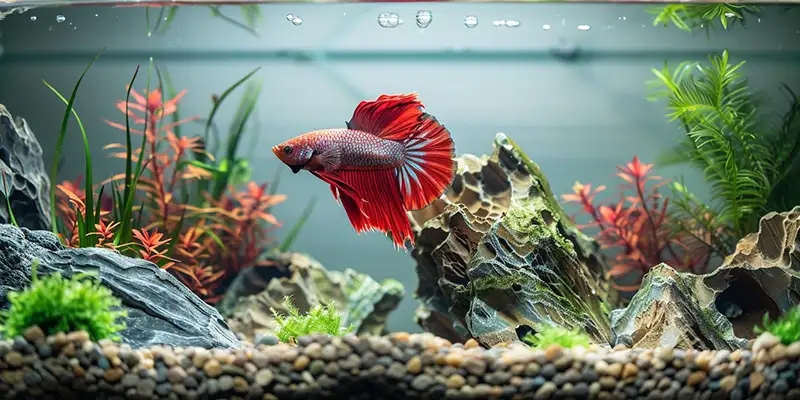
While mirrors can be used as a tool for behavioral enrichment, there are alternative methods to provide stimulation for betta fish. One effective approach is the introduction of decorations and plants within the aquarium. These elements can create a more dynamic and engaging environment, allowing the betta to explore and establish territory naturally. Live plants, in particular, can provide both visual stimulation and improve the overall health of the aquarium by enhancing water quality.
Another alternative is the use of floating toys or objects that move with the current. These can attract the betta’s attention and encourage exploratory behavior without the stress associated with seeing a perceived rival. Additionally, providing a variety of hiding spots and structures can allow the betta to feel more secure and reduce the likelihood of stress-related behaviors.
For more help, take a look at our article on whether betta fish like music.
Conclusion: Do Betta Fish Like Mirrors?
In conclusion, betta fish do not inherently “like” mirrors, but their reactions to mirrors are driven by their territorial and aggressive instincts. While short-term exposure to a mirror can provide behavioral stimulation and encourage natural displays, prolonged exposure can lead to stress, exhaustion, and potential health issues. Responsible use of mirrors, combined with other forms of enrichment, can contribute to the overall well-being of betta fish including :
- Letting them fulfill their natural instinct.
- Removing pent up aggression.
- Encouraging breeding behavior.
- Stopping boredom
- And helping to stop constipation as well.
And remember if you plan on using a mirror, you should use it sparingly to reduce the chance of him becoming stressed for too long.
Betta fish care can be a little challenging without the right knowledge. Click the link to know everything you need to about Betta fish care!
FAQs
- What happens when a betta fish sees its reflection? Betta fish typically react to their reflection with aggressive displays, such as flaring their gills and spreading their fins, as they perceive it as a rival.
- Is it safe to use mirrors with betta fish? Using mirrors in moderation can be safe and provide enrichment, but prolonged exposure can lead to stress and health issues.
- How long should I expose my betta fish to a mirror? It is recommended to limit mirror exposure to a few minutes a day to prevent stress and exhaustion.
- Can female betta fish also react to mirrors? Yes, female betta fish can react to mirrors, though their responses are typically less aggressive than those of males.
- What are the signs of stress in betta fish? Signs of stress in betta fish include loss of appetite, changes in coloration, lethargy, and unusual swimming patterns.
- Are there alternatives to using mirrors for betta fish enrichment? Yes, alternatives include decorations, live plants, floating toys, and providing hiding spots to create a stimulating environment.
- Why do betta fish flare at their reflection? Betta fish flare at their reflection because they perceive it as an intruding rival and display aggression to defend their territory.
- Can mirror exposure help in betta fish health? Short-term mirror exposure can provide mental stimulation and encourage natural behaviors, but it should be used with caution to avoid stress.
- Do betta fish recognize their own reflection? Betta fish do not recognize their reflection as themselves; they see it as another fish.
- How can I tell if my betta fish is overstressed from mirror exposure? Overstressed betta fish may show signs of exhaustion, reduced activity, and physical deterioration.
- What are the benefits of using live plants in a betta fish tank? Live plants improve water quality, provide hiding spots, and create a more natural and engaging environment for betta fish.
- How do betta fish establish territory? Betta fish establish territory by selecting an area, displaying aggression towards intruders, and marking the space with their presence.
- Can betta fish live in community tanks? Male betta fish are best kept alone or with very peaceful species, while female bettas can sometimes live in sororities or community tanks with careful monitoring.
- What is the natural behavior of betta fish in the wild? In the wild, betta fish establish territories, engage in aggressive displays, and use vegetation for hiding and breeding.
- Are betta fish intelligent? Betta fish are known for their problem-solving abilities and can learn to recognize their owners and perform simple tricks.
- What types of decorations are best for betta fish tanks? Smooth decorations, caves, and silk or live plants are best to avoid damaging their delicate fins.
- Can betta fish get bored? Yes, betta fish can get bored, which is why providing a stimulating environment with varied decorations and occasional mirror exposure is beneficial.
- What is flaring, and why do betta fish do it? Flaring is when betta fish spread their gills and fins wide to appear larger and more intimidating, usually in response to a perceived threat or rival.
- How can I create a stress-free environment for my betta fish? A stress-free environment can be created by maintaining clean water, providing hiding spots, using live plants, and limiting mirror exposure.
- What are the common health issues in betta fish related to stress? Common health issues related to stress include fin rot, swim bladder disorders, and weakened immunity leading to infections.
By understanding the nuanced responses of betta fish to mirrors and incorporating various enrichment strategies, owners can ensure their pets lead happy, healthy lives. Betta fish thrive in environments that cater to their natural behaviors and provide both mental and physical stimulation.
Sources :
https://www.hepper.com/do-betta-fish-like-mirrors
https://www.youtube.com/watch?v=tAWFv-6zqAY

Betta Keeper Questions
Ask a Question About Your Betta