
Last Updated on 2025-11-09
If your betta is swimming awkwardly and you think it may be swim bladder disease, then you’ve found the right article to help you treat it. Swim bladder disease in bettas is fairly common, but it’s quite uncommon for it to become fatal.
In fact, in just a few days of treatment, you should be able to cure your betta. If you want to find out exactly how, then keep reading!

Key Takeaways:
- Swim bladder disease in betta fish can be caused by various factors such as overfeeding, constipation, shock, parasites, and more.
- Symptoms include buoyancy problems, lopsided swimming, and floating irregularities.
- Treatment depends on the cause, including fasting for overfeeding cases, and improvements may be seen within a few days.
- To prevent swim bladder disease, focus on high-quality food, avoiding overfeeding, and maintaining water quality.
Or watch the video!
What Is The Swim Bladder?
Your bettas swim bladder is the organ which allows him to control his buoyancy. Instead of constantly swimming to stay in place, the swim bladder does the work instead. Helping your betta save energy and swim easier.
It is located behind all the other organs, so if any of them swell it can affect your betta.
What Is Swim Bladder Disease?
Swim bladder disease isn’t actually a disease. It’s a term used to describe any ailment whether it’s illness, damage or situation that causes your bettas swim bladder to stop working properly.
So when treating swim bladder disease, you’re actually trying to treat symptoms of something else.
| Disease: | Swim Bladder Disease/Swim Bladder Disorder |
| Causes | Overfeeding Constipation Shock Parasites Bacterial Infection Poor Water Conditions Physical Trauma Cysts Birth Defects Egg Binding |
| Symptoms | Buoyancy Problems Trouble Swimming Lopsided Swimming Floating On Their Side Swimming Upside Down Struggling To Maintain A Normal Position Distended Belly/Curved Back Lack Of Appetite Lethargy Clamped Fins Shaking |
| Treatment | Overfeeding: Fast your betta for 1-2 days, gradually increase the heat a couple of degrees to speed up your bettas metabolism. If after 2 days there’s no change, feed your betta daphnia. Parasite/Bacterial Infection Move your betta to a quarantine tank. Make sure you’re using 25% of the old tank water and 75% new conditioned water. Dose the tank with medication for either a parasitical or bacterial infection (depending on what it is). Other Causes Mix one tablespoon of Epsom Salt in a gallon of conditioned tap water. Add your betta to the water and let them swim in it for 10-15 minutes. Monitor their behavior throughout, and then place them back in their tank. If things get worse while in the bath, place them back in their tank immediately. |
| Prevention | Feed Your Betta High Quality Food Soak The Food Before Adding It Avoid Overfeeding Keep The Water Quality Good Check For Bullying Remove Ornaments That Could Injure Your Betta |
What Are The Common Causes Of Swim Bladder Disease In Bettas?
There are a number of different causes of swim bladder disease. The first thing you’re going to need to do is diagnose the right cause. If you don’t, you may end up doing more harm than good.
1. Overfeeding/Constipation
In the vast majority of cases, swim bladder disease is caused by overfeeding. Bettas are particularly gutty fish and they will never stop eating, even when they’re full. This often makes them constipated which can have an effect on their swim bladder. Not only can this cause them to become constipated but it can also make fatty deposits build up in their bladder.
As well as overfeeding your betta may be gulping too much air. Because bettas tend to eat from the surface they can also gulp down air which is going to affect their swim bladder.
If you’re feeding your betta food which has too much air in it, it can cause constipation as well. This is most likely to occur in low-quality food, so you should always buy your betta high-quality food. I like Aqueon Betta Pellets.
2. Shock
A less common cause of swim bladder disease is shock. If something drastic has happened in your tank the stress and shock could have an effect. The shock could be caused by a whole range of factors. Such as a sudden temperature change or light constantly changing.
3. Parasites
If you haven’t shocked your betta or you’re confident they haven’t been overfed then it could be parasites. Parasitic worms can infest your betta’s stomach and intestines. Which makes it a lot harder for your betta to swim. While parasitic worms aren’t normally fatal, in extreme cases this can happen and can result in swim bladder disease.
4. Bacterial Infection
Swim bladder disease can also be caused by bacterial infections. This along with parasites is likely due to poor water quality. If your betta is suffering from a bacterial infection then swim bladder disease will likely be a symptom along with many other symptoms.
However, if a bacterial infection has gotten so bad that the swim bladder is being affected then euthanasia may have to become an option.
If you notice swim bladder disease along with severe bloating and pineconing scales then you should start treating your betta for dropsy. However, at this point, the chance of survival is quite low.
5. Low Water Temperature
If your tank is below 76°F then this could be why your betta has swim bladder disease. When the water temperature in your tank drops below the ideal temperature it’s going to cause your bettas digestive system to slow down. When the digestive system slows down your betta is more likely to become constipated, as well as other organs swelling.
6. Poor Water Conditions
It’s not just low water temperature that can cause swim bladder disease, but poor water conditions in general are going to increase the chance of it happening.
If the ammonia, nitrite, and nitrate levels in the tank are too high, the tank is overcrowded, the tank is too small, or the temperature is fluctuating, it will increase the chance of swim bladder issues occurring.
7. Physical Trauma
If something has injured your betta, then this could also result in swim bladder disease occurring. Keep an eye out for any aggressive tank mates or sharp objects in your tank that might have damaged him.
In fact, sometimes, light glaring on the tank can confuse your betta and cause him to damage himself on the tanks glass.
8. Other Causes
Along with the most common causes listed above, cysts in the kidneys, birth defects and egg binding in female bettas can also be a cause of swim bladder disease. And if this is the case there’s not much you can do except wait and see what happens.
Is Swim Bladder Disease Fatal?
Whether or not swim bladder disease is going to be fatal depends on what the underlying cause behind it is. If your betta has swim bladder disease because of constipation or bloating then he’ll make a full recovery. But if it’s due to something more serious such as dropsy then the chance of your betta surviving are very low.
The main way swim bladder disease becomes fatal is due to the injuries your betta may sustain. If your betta has trouble swimming away from the surface some of his skin may be constantly exposed. This exposure will cause ulcerations, sores, and infections to occur when the slime coat on your bettas scale starts to dry out.
The same thing will happen if your betta can’t swim off the substrate. The constant scraping against gravel or sand will begin to remove your bettas stress coat as well.
Is Swim Bladder Disease Contagious?
Swim bladder disease itself is not contagious, however, the conditions that may have caused it could also cause it in other fish. Poor water quality or temperature fluctuations, for example, can affect all fish.
So to go into more depth it depends on what the cause behind it is. If your betta has swim bladder disease because of constipation or overfeeding then obviously that isn’t contagious.
However, if you’re overfeeding your betta then you may be overfeeding other fish as well which might result in other fish suffering from it.
If swim bladder disease is caused by parasites or bacteria then it’s more likely that it can spread through the water and infect other fish if they have weakened immune systems.
But this is because the organisms are already in the tank with your betta. If your other fish have strong immune systems then the chances of them getting swim bladder disease are slim too!
What Are The Symptoms Of Swim Bladder Disease In Bettas?
There are a variety of different swim bladder disease symptoms you can expect to see in a betta with the disorder. However, not all of the symptoms may be exhibited at the same time. The symptoms you notice will be dependent on what is causing swim bladder disease to occur.
Symptoms Related To Overfeeding/Constipation/Too Much Air
If your bettas swim bladder disease is being caused by any of the above you will notice the following symptoms:
- Trouble swimming and buoyancy problems – You may notice your betta unable to move from the substrate in your tank or on the other hand he may only be able to float on the surface of the water.
- Lopsided swimming – as well as floating on the surface or sinking to the bottom it’s not uncommon to notice a betta with swim bladder disease swimming on his side or swimming lopsidedly.
- Your betta just floats on their side – Sometimes, swim bladder disease stops your betta from swimming properly, which result in this awkward floating.
- Swimming upside down – sometimes your betta will go completely upside down when they have swim bladder disease, this can be frightening to see, but you can still save them!
- Struggling to maintain a normal position – This is a classic one. No matter how much your betta swims in a certain area, he will always begin dropping down or floating up.
- A distended belly or curved back – This is a tell-tale sign of constipation or overfeeding. However, if along with this symptom you also notice your betta’s scales are pineconing then he is suffering from dropsy (which can be fatal if left untreated).
- Affected appetite – Your betta may lose his appetite completely and not want to eat. Or he may have trouble eating if he’s stuck on the bottom or top of the tank.
- Lethargy – If you’ve ever eaten so much you don’t want to move then you know how your betta feels when it’s been overfed. Lethargy is a classic sign but beware, in some cases, it could occur because of an infection.
Symptoms Related To Parasites And Bacterial Infections
As well as the symptoms listed above if your betta is suffering from a parasite or a bacterial infection then you may notice the following symptoms:
- Clamped Fins – One of the biggest tell-tale sign of any infection in your betta is clamped fins. When they’re stressed their fins stay close to their body. If you notice this, then treatment for overfeeding or constipation may not be effective.
- Shaking – If you notice your betta is shaking then that’s another clear sign that it’s got an infection and it’s not just being overfed.
An Example Of Swim Bladder Disease In Bettas:
How To Treat Swim Bladder Disease In Bettas
The type of treatment you’re going to need really depends on what’s causing swim bladder disease to occur. If you have a quarantine tank handy then in most cases it’s a good idea to move your betta into one, so you can treat him without worrying about medicating the other fish and plants in your tank as well.
Swim Bladder Disease Caused By Overfeeding
Luckily for you if your bettas swim bladder disease is caused by overfeeding then the chances of making a recovery are good as long as start treatment immediately.
- If you have other fish in your tank then move your betta to a quarantine tank.
- Now that your betta is in the tank you should fast him for 1-2 days. Don’t worry this may seem like a long time to you, but in the wild bettas often go days at a time without food.
- While you’re fasting your betta you should also slowly start raising the temperature in the tank up to 80°F. The increased heat is going to speed up the rate in which your betta digests food.
- After 2 days you should check to see if your betta is improving. Sometimes this in itself is enough to cure swim bladder disease but if not, don’t worry.
- If your betta still has the symptoms of swim bladder disease after 2 days begin feeding daphnia (preferably live daphnia) which is rich in fiber.
- If you notice that your betta is having trouble chasing daphnia, then you can try holding some freeze dried daphnia in the tank for him. Just make sure you let it soak and reabsorb water before feeding it to him.
- If after a week you don’t see improvement, then your betta may have something more serious than constipation.
(It’s important to note that some people recommend feeding your betta peas if they have swim bladder disease or constipation. While this is good for omnivorous fish, bettas are carnivores, so this won’t be good for them.)

- Tropical fish food that contains up to 40%, nutrient-rich Black Soldier Fly Larvae, the first ingredient
Parasite/Bacterial Infection
If you think that your betta is suffering from a parasite or bacterial infection, then the process is going to similar, however, instead of starving your betta, you should medicate him instead.
- Move your betta to a quarantine tank where you can medicate the water.
- Begin dosing your aquarium. Seachem Kanaplex is the go to for most fish keepers, however, I’d recommend consulting a specialist before administering!
- Follow the instructions on the bottle and monitor your bettas progress daily.
If you think it’s a bacterial infection, you’ll be pleased to know that one study found antibiotic treatment was found to be completely successful on three cases suffering from swim bladder disease!

- KanaPlex is a blended kanamycin based medication that safely and effectively treats several fungal and bacterial fish diseases (dropsy, popeye, fin/tail rot, septicemia)
Shock
If you there’s been a sudden temperature drop in your tank or if your bettas been injured then they may be in shock. If you think shock is causing swim bladder disease in your betta then there’s not a lot you can do for him. The best thing to do is to make sure the tank is the right temperature and turn off the lights.
When the lights are off your betta will be more inclined to rest which will help him make a speedy recovery.
Epsom Salt For Swim Bladder Disease
If you have some Epsom salt, it can often be an effective way of treating swim bladder disease in your betta if he’s constipated. An Epsom salt bath will give you the best results and here’s how to do it:
- Mix 1 tablespoon of Epsom salt with a gallon of conditioned tap water in a clean container.
- Once the Epsom Salt has dissolved add half a gallon of your aquarium water into the container.
- Replace the water taken from your aquarium with conditioned tap water which is the same temperature as your aquarium.
- Leave your betta in the bath for 10-15 minutes. If this hasn’t cleared his constipation in that time, put him back in his tank.
- Continue monitoring your betta throughout the day to see if he’s excreted or he’s swimming better.
If you notice your fish stop moving in the Epsom salt bath, or if he’s just laying in one spot then add him back to your aquarium immediately.

- 100% PURE EPSOM SALT (MAGNESIUM SULFATE USP): Unscented Epsom salt made with magnesium sulfate USP for a clean, simple soak with no added fragrance.

Avoid Bettafix/Melafix
The problem with bettafix/melafix is that at worst it can be fatal to your betta if used incorrectly, and at best there’s no REAL evidence that it actually works. As you can see:
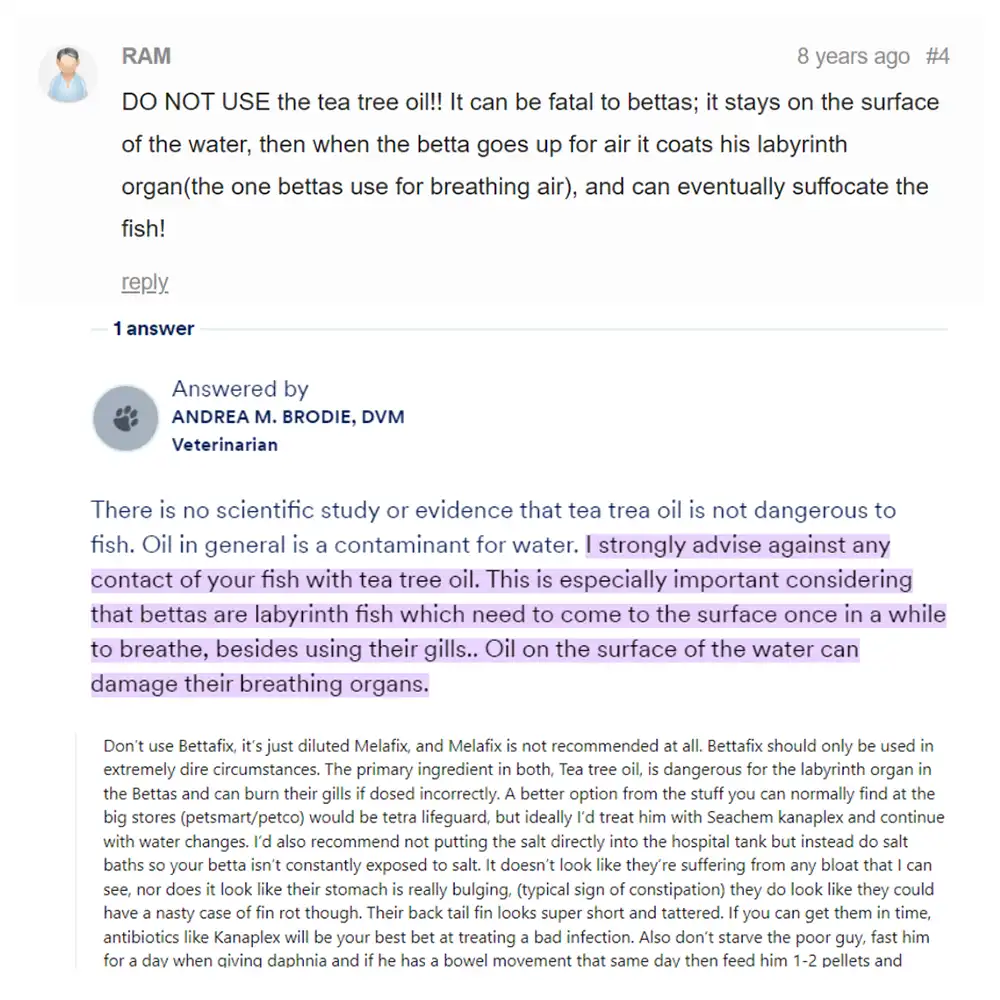
At best the results are inconclusive:

How To Prevent Swim Bladder Disease
Swim bladder disease is quite easy to prevent when you know how, but it is going to require small changes to the way you’re currently taking care of your betta. If you want to prevent the risk of swim bladder disease as best you can then follow these steps:
Buy High Quality Food
One of the best ways you can prevent swim bladder disease is by using food from a reputable brand. Lower quality food can often be filled with more air. This can make your betta constipated and bloated leading to swim bladder disease. (Aqueon Betta Pellets are a great choice.)
Soak Your Betta’s Food
Before feeding your betta try soaking his food for a little bit so it sinks. When bettas eat from the surface of the tank they can swallow air. Swallowing too much air can cause swim bladder disease. (If you don’t want to do that then consider buying sinking fish food.)
Avoid Overfeeding
A bettas stomach is the same size as it’s eye so they don’t need as much food as you think. No matter how much you feed your betta he will always be hungry, so stick to 2-3 pellets, or a small amount of flakes a day. It’s best to always check the recommended amount on the container.
Keep The Water Quality Good
There are a number of ways you can do this, including performing regular water changes, vacuuming the gravel and removing algae from your tank. As well as this every once in a while you should also clean all the ornaments in your tank.
Not only is this going to help prevent swim bladder disease but it’s also going to help prevent a lot of other illnesses as well. Your ammonia and nitrite levels should be at 0ppm and the nitrate levels should be below 20ppm
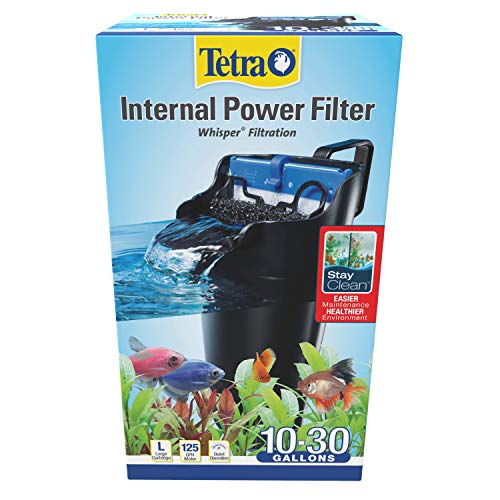
- UNIVERSAL DESIGN: Tetra Whisper 20i Internal Filter is an all-in-one air pump and water filter system.
Keep The Temperature Constant
Temperature fluctuations can cause swim bladder disease and stress your betta out. If your heater breaks and you notice the temperature dropping rapidly then check out this article on the steps you can take to keep your tank warm.

- Powerful & Reliable Heating: The Fluval M 100 Watt Submersible Heater ensures consistent and precise temperature control for aquariums up to 30 gallons. Built with superior European components, this heater delivers exceptional reliability and performance
Look For Aggression
If your betta is getting into fights with any of the other fish in your tank then you’ll need to remove the culprits. This will help reduce the chance of injuries resulting in swim bladder disease.
(Check out 33 of the best tank mates for your betta.)
Remove Ornaments That May Cause Injury
If you have any ornaments or plastic plants with sharp edges then you should remove them from the tank. This will also decrease the chance of a lot of diseases and infections occurring.

Other Reasons Your Betta Is Swimming Sideways:
Why Is Betta Fish Swimming Sideways After Water Change?
Betta fish are popular with people who are just starting to keep fish because they have interesting personalities, pretty fins, and high spirits. They also like to swim, float, or lay in weird ways in their tanks. But if they swim in a strange way after a water change, it could mean that something is wrong. Here’s a list of the most common reasons why Betta fish swim sideways after a water change.
| Reason for Betta Fish Swimming Sideways | What to Do |
|---|---|
| Too Much Chlorine in the Water | Ensure you treat tap water with a water conditioner before adding it to the tank. |
| Temperature Shock | Match the water temperature when changing water to prevent shock. |
| Water Is Too Warm | Maintain the water temperature between 78-80°F (25.5-26.5°C). |
| Water Is Too Cold | Keep the water within the preferred temperature range for Betta fish. |
| Lack of Oxygen in the Water | Ensure sufficient oxygen in the tank with aeration and surface movement. |
| Fish Is in Shock | Identify and address the cause of stress or shock in the aquarium. |
1. Too Much Chlorine In The Water
Most of the time, inexperienced aquarists poison their fish by putting fresh tap water in that hasn’t been treated in the aquarium or by adding a lot of untreated chlorinated water to their tank during a water change. Too much chlorine in an aquarium can actually hurt a fish’s gills, which leads to bigger problems that end with the Bettas swimming sideways.
2. Temperature Shock
If you’re not matching the water temperature in the tank when you add more water, your betta may end up going into shock. To avoid this, you should always make sure you’re matching the water’s temperature. Especially in smaller tanks which can fluctuate a lot more
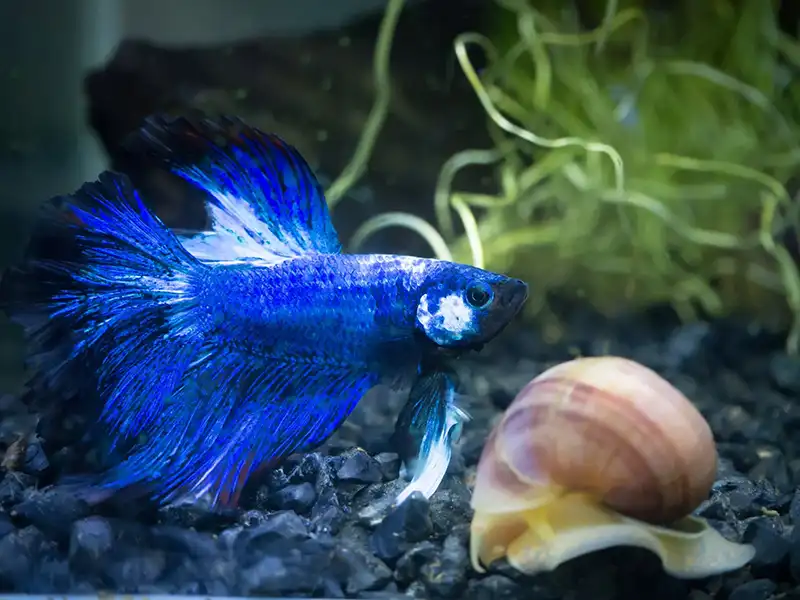
3. Lack Of Oxygen In The Water
If there’s a lack of oxygen in the tank, then your betta will need to get the oxygen from the surface of the water, however, doing this for prolonged amount of time is actually harmful to them, so it may end up causing them to damage their organs and begin swimming sideways.
That’s why even though in some tanks they’re not needed I always recommend an air bubbler.
4. Fish Is In Shock
There are so many different things that can cause shock to a Betta. It could be from a long period of stress, a serious injury, illness, or a sudden change in water. When this happens, it’s not uncommon for them to have a hard time swimming. So make sure you’re figuring out what’s causing it and act quickly because shock in fish can be life-threatening.
7. Fish Is Just Resting
Sometimes, Bettas can just be resting on their side. This doesn’t necessarily mean that something is wrong with it. If it is not doing this too often or for more than a few minutes at a time, it is probably just taking a break from swimming around in the tank.
My betta first betta would ALWAYS lay on his side at the bottom of the tank, or on top of some java moss. The tank wasn’t high either, he just loved doing it.
FAQ
Here are some more frequently asked questions that people have about swim bladder disease in their bettas!
Will Swim Bladder Disease Cure Itself?
Swim bladder disease may be able to cure itself if it’s due to constipation or bloating. However, if it’s due to something more serious like an infection, then your fish will require your assistance to get better.
Does Swim Bladder Disease Hurt Your Fish?
While it’s to known whether swim bladder disease hurts your fish or not, at the very least it’s going to be uncomfortable for them. But swim bladder disease caused by an infection is probably painful as well.
Is Swim Bladder Disease Reversible?
With the right care, swim bladder disease is reversible, and in some cases you may see a change in your fish after a little as a week or two!
How Long Can A Fish Live With Swim Bladder Disease?
It’s possible for a fish to live a full life with swim bladder disease. However, you need to make sure that the issues that were causing it in the first place were solved.
Recap
You should know all the vital information you need to help your betta recover after suffering from swim bladder disease. Here are some of the main points to remember.
- Swim bladder disease has a range of different causes including, shock, injury, infection, constipation and overfeeding.
- The symptoms include floating at the top or bottom of the tank, unable to stay in one spot without swimming, lopsided swimming, a distended back or bloated belly, loss of appetite, and lethargy.
- If you think it’s due to infection then you’re going to need to use the appropriate medication.
- And lastly, if you think it’s due to stress or injury there’s nothing you can do except be patient.
- You can also try and Epsom bath if your betta is suffering from constipation related swim bladder disease.
- Some of the ways to prevent swim bladder disease in bettas is too make sure you’re not overfeeding them, keeping the tank water clean, and helping them avoid injuries.
- Swim bladder disease isn’t normally fatal when it’s due to constipation but it can be in other cases.
- And lastly, swim bladder disease isn’t contagious but if it’s related to water quality issues then there’s a chance other fish will get it as well.
If this article didn’t solve your problem, or if you think your betta may be suffering from something else then check out:
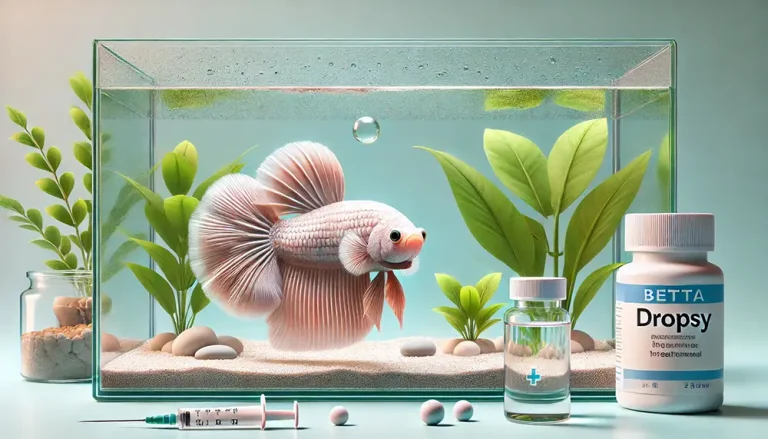
- Dropsy In Bettas – Does your betta have pineconing scales as well as swim bladder disease? If so, then he’s suffering from dropsy. If this is the case then you need to act immediately!
- Fin Rot In Bettas – Fin rot is a common disease bettas catch. If your betta has fin rot then you should treat it ASAP. So many people have lost their bettas by not treating fin rot quickly enough.
- Ich In Bettas – Ich is a parasite that causes white spots over your betta’s body. When they have ich their immune system weakens. If left unchecked it will become fatal, so find out how to cure it here!





Thanks for this comprehensive info. I did the Epsom salt bath just now with my betta, Little Guy. Could I do this daily until he is hopefully recovered?
Hey Jen, I wouldn’t do a salt bath for more than a couple of days without giving your betta a break from Epsom salt baths. If he’s symptoms aren’t improving, take one day off for him to rest before giving him salt baths for a couple more days again.
I hope this helped!
I just purchased a very sad looking betta from a pet store a few days ago. He was laying in the bottom of his cup at the store, he was laying in the bottom of the temporary tank I had him in for a few days, and now he’s laying in the bottom of his 2.5 gallon tank. He’s struggling to swim and I don’t think he’s been eating. I fed him once and he wasn’t interested. That was two days ago. I’m pretty sure he has a swim bladder issue, my question is: how long do I wait before I try some treatment options. I just put him in his large tank, I’m hoping he will get comfy and feel better, but I’m worried about the little guy. This is my first betta, I had fancy goldfish in the past (one with a swim bladder defect) and I just want to give him the best care. Thanks!
Hi Gayle,
It can be hard to decide whether you should be treating your betta at this stage as there could be a whole variety of things causing the issue. As well as swim bladder disease he may also be suffering from ammonia poisoning.
What other symptoms is he showing apart from struggling to swim and not eating?
Hi! I just bought a Twin Tail Half Moon Betta yesterday. Brought him home & got a brand new 2 gallon tank ready for him. We waited the 15-20 minutes before incorporating him into the new tank (I used spring water & a few drops of stress cost per the employee @ PetSmart). I may have rushed this process after reading a ton of blogs that say you should first test the ph, then temperature. Once everything is good to then let a little tank water into the container at a time, then eventually put them in the tank without getting their container water in the tank. I had no idea so I did that wrong. 🙁
My concern is after an hour or so it seemed like he couldn’t swim right. He was either completely vertical, face down or face up & when he would try to “correct” it he would swim sideways. His belly is quite bloated looking so I believe he has a swim bladder problem. Blogs I’ve read say to remove them to a “hospital” tank (same temp, ph & set w/ filter) but I don’t have one of those so I thought it would be best to put him back in the container he was in (using the water from the tank he has been in for a few hours). It has helped in the fact he isn’t fighting as hard to stay balanced. I’m really at a loss if that was the correct move but he made it through the night, last night!
So my question is…should I keep him in this little container during the 3 day fast & then pea diet? Or slowly incorporate him back into the tank to go through that process? Also should I test the ph & temp. I believe your blog said to raise temp to 80 degrees to help their digestion speed up?
I just feel so bad, not to mention his coloring is magnificent…never seen one quite like this so Im really hoping he makes it! Any guidance on this would be super appreciated!!!! TIA
Hi Lisa,
Unfortunately, there could be quite a few problems happening at the moment.
Normally when setting up a tank, you’ll need to use a biological supplement to start growing good bacteria in the tank over a few days. Without this good bacteria, the tank is going to become filled with ammonia, nitrates, and nitrites which could be causing this behavior. Here’s a full article on Ammonia Poisoning. If you haven’t added a biological supplement, then you’re going to need to get an API Test Kit (to test for ammonia, nitrates and nitrites) and an Ammonia Neutraliser ASAP to make sure an ammonia spike doesn’t kill him.
As well as the risk of ammonia poisoning, if the tank wasn’t the right temperature when you introduced them, they may also be suffering from temperature shock, which you can learn about here.
As for moving him to his small container, you definitely shouldn’t do this. The small containers they’re stored in are terribly cruel. Keep him in the 2 gallon tank, and test the ammonia levels every day to make sure they’re not going too high. You may also need to perform 25%-50% water changes every day.
It seems like the problem here isn’t a digestion issue but rather a problem with the conditions in the tank so I don’t think increasing the temperature is going to do a lot.
And lastly, while a 2-gallon tank is a good temporary home, it’s still not an adequate size for a betta. To have a happy and healthy betta you should move him into a tank that’s at least 5 gallons in size when you can.
I hope this information helped and your betta’s health comes back soon!
Hi, I just got a new betta a couple weeks ago. I am almost positive he has swim bladder disease because he is lethargic, can’t swim to the bottom of the tank, and won’t eat. I haven’t been feeding him for a couple days and am trying to give him peas, but he won’t or can’t eat them. It seems to be progressively getting worse and he has started to develop fin rot as a result from the stress. I need help figuring out what caused this and how to fix it! I recently ran a full bacterial disease cure for a separate reason on my other betta, but it was labeled a “general cure” so I’m confident it wasn’t a bacterial infection. Also wasn’t overfeeding. He is currently housed in a ten gal that he shares with another male betta with a mesh divider in between them. I keep the tank fairly clean. It might be shock, or maybe he just had it since the pet store and it’s just getting worse now… anyway, I’m starting to get really concerned if he is going to live or not. Please help!!
Hey,
Is your betta showing any other symptoms of swim bladder disease?
It sounds like it could have been brought on by the stress of the move to his new tank. Just to double-check is the tank heated and filtered, and can he see through the mesh to other betta? All of these things could be causing stress as well.
If it’s being brought on by stress it might be worth picking up some API stress coat. It contains aloe vera which helps reduce stress in your betta.
I hope he gets better soon!
Well, I messaged a question here 4 days ago..and I left my email address. No reply.
Hi, sorry, unfortunately, I deal with about 20/30 spam comments a day, so yours might have been filtered out. What was the question?
My betta has sbd related to dropsy from what looks like a bacterial or parasitic infection….ive been treating with both kanaplex metroplex and epsom salt (1 tsp per 5gal) and after 2 wks her pineconing she has aroubd her head/gills is gone, her fins are no longer clamped, she has an appetite back but i have to handfeed her, and she seems to be fully there in the head again…she was listless before and she is looking around curiously again…but she still looks to be suffering from sbd…if your fish has dropsy please try these medications though because when i stopped kanaplex after a week the pineconing came back then baxk on kanaplex its gone again..im thinking of upping the kanaplex dosage for the 3rd week to really try to knock out this infection or parasite for good…then boost her immunity with voogle…scared of overtreating though
Hi
I just got a female veiltail and it looks like she is still very young. She lives in a 2.5 gallon that I had pre cycled already weeks before buying the fish. I noticed on the second day of bringing her home from the petstore that she has been staying on the top of the tank and occasionally floating on her side before readjusting herself. She continually does this. Is this related to swim bladder disease?
Hey this absolutely sounds like swim bladder disease. It could be due to the stress of the new move. Did you allow your betta to acclimate to the waters parameters before adding them to the tank? Also 2.5 gallons is quite small for a fish tank, so you might also want to check the pH and ammonia to make sure that the parameters are okay