
As an Amazon Associate I earn from qualifying purchases. Product links on this page may be affiliate links.
Setting up your first Betta tank doesn’t have to be complicated! In fact, creating a comfortable home for your Betta can be straightforward with a few essential steps. Many online sources contain outdated or inaccurate information about Betta care, so this guide will help you avoid common mistakes and create the ideal tank for your fish.

This guide is divided into two main sections: first, a list of everything you need for a healthy Betta tank, and second, a step-by-step guide to setting it up. Let’s start by choosing the best tank for your Betta.
Key Takeaways
- Choose a 5-Gallon Tank Minimum: Bettas need space to swim and explore, so a minimum of 5 gallons is recommended for a healthy habitat.
- Filter and Heater Are Essential: A gentle-flow filter keeps water clean, while a heater maintains stable temperatures around 78°F—ideal for Bettas.
- Use Smooth Substrate: Gravel or aquarium soil provides surface area for beneficial bacteria and a soft, safe surface for your Betta’s fins.
- Decorate with Plants and Hiding Spots: Live or silk plants, caves, and smooth decorations help reduce stress, offer hiding spots, and keep Bettas entertained.
- Provide Proper Lighting: Adjustable LED lights create a natural day-night cycle, helping your Betta regulate its activity and rest.
- Cycle the Tank Before Adding Your Betta: A fishless cycle establishes beneficial bacteria, creating a safe, balanced environment before introducing your Betta.
What To Look For In A Betta Tank
Choosing the right tank is crucial for your Betta’s health and happiness. Unfortunately, there’s a lot of misinformation that can lead to poor tank choices. Here’s what to consider:
The Most Common Myth
A common myth is that Bettas can thrive in tanks as small as 1 or 2.5 gallons. While Bettas can survive in these small spaces, it’s far from ideal. Small tanks often lead to shorter, less healthy lives for Bettas. If you’re considering a tiny tank, it’s best to reconsider and opt for a larger one that meets their needs.
What Tank Size Should You Get?
A minimum of 5 gallons is recommended for a Betta tank. Larger tanks provide many advantages:
- More swimming space: Your Betta will have room to move freely.
- Decor and plants: Larger tanks allow space for decorations and plants, which provide essential hiding spots and reduce stress.
- Stable conditions: Bigger tanks maintain temperature and pH more consistently, reducing stress for your Betta.
- Fewer water changes: In larger tanks, waste accumulates more slowly, so water changes are less frequent.
Curious about how to setup a 5 gallon tank? Let’s look into it!
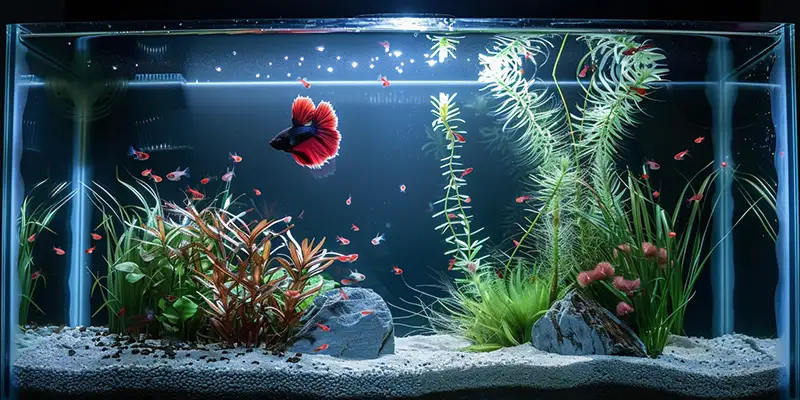
Are Lids Necessary?
While not absolutely required, having a lid for your Betta’s tank is highly recommended. Bettas are known for their surprising jumping ability, and without a lid, they risk jumping out of the tank. If your tank doesn’t come with a lid, you can easily make one using mesh or netting.
Choose Length Over Height
After settling on at least a 5-gallon tank, look for tanks with more length than height. Bettas prefer swimming horizontally, so a longer tank is better suited to their natural movements. This will make their environment feel more spacious and comfortable.
Check out the full Fluval Spec V Review.
What Are The Best Tanks?
Here are some popular choices for Betta tanks that meet essential criteria:
| Name | Fluval Spec V | Penn Plax 5 Gallon Curved | Marina 5 Gal | Fluval Flex 9 | Marina 10 Gal |
|---|---|---|---|---|---|
| Size | 5 Gal | 5 Gal | 5 Gal | 9 Gal | 10 Gal |
| Filter | Yes | Yes | Yes | Yes | Yes |
| Light | Yes | Yes | Yes | Yes | Yes |
| Lid | No | Yes | Yes | Yes | Yes |
| Image | 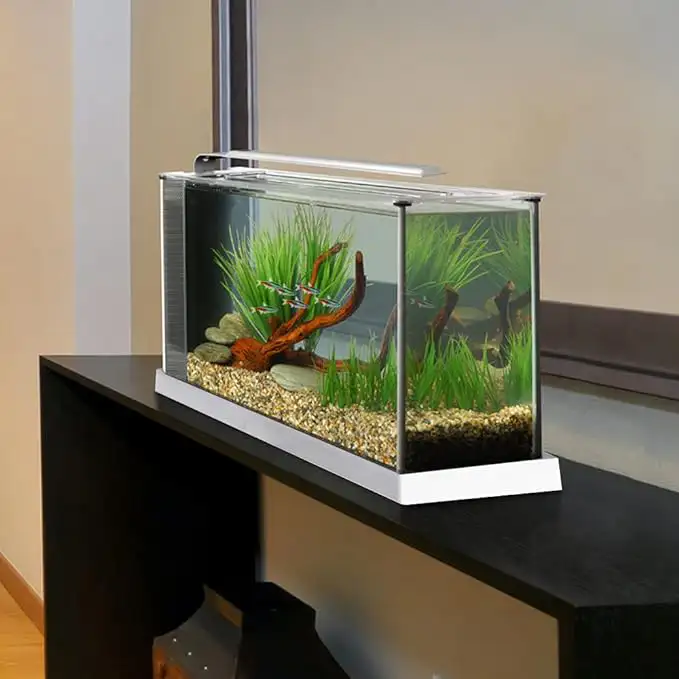 | 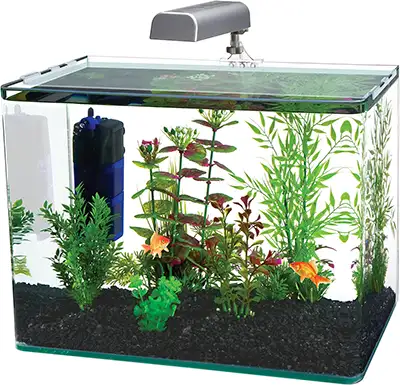 | 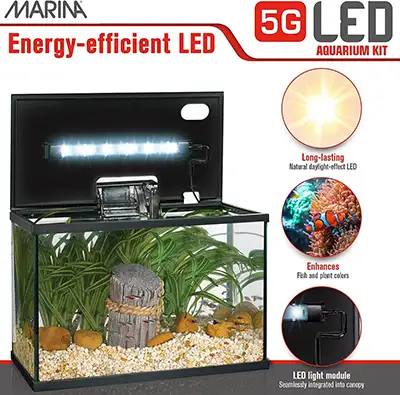 | 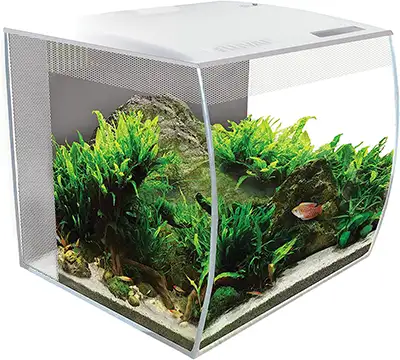 | 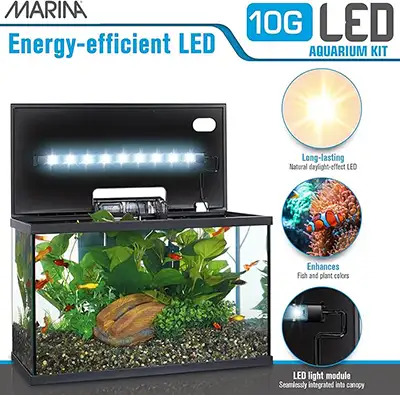 |
Does Your Betta Need A Filter?
Yes, a filter is highly recommended for a Betta tank. While you may see Bettas in bowls without filters, they actually thrive in clean, well-filtered environments. Filters keep the water clean, reducing toxins that build up from waste, leftover food, and plants. Without a filter, you’d need to change the water daily, which can be stressful for both you and your Betta.
Choose a filter with a slow or adjustable flow. Bettas prefer calm water, and a strong current can make it difficult for them to swim. Adjustable filters allow you to create a gentle flow, ideal for Bettas. If the current is still too strong, you can add plants, decorations, or filter sponges to slow it down.
For optimal health, select a filter with three-stage filtration: mechanical, chemical, and biological. These filters provide cleaner water by capturing debris, neutralizing toxins, and fostering beneficial bacteria that keep the tank’s ecosystem stable.
Does Your Betta Need A Heater?
Yes, Bettas are tropical fish and need a heater to maintain a stable water temperature. Even if your room stays warm, temperature fluctuations can happen, especially in small tanks. A sudden drop in temperature can cause temperature shock, which weakens your Betta’s immune system and can lead to illness.
For most tanks, aim for a heater that provides 3-5 watts per gallon. This ensures the water stays within the ideal range of 76-82°F, with 78°F being optimal. In larger tanks, it may be beneficial to use two smaller heaters to maintain an even temperature throughout.
Note: Heaters in tanks under 3 gallons can be risky, as they may overheat. This is another reason why a minimum of 5 gallons is ideal, providing a safer environment for a heater.
Want to know more about why heaters are so important?
Which Substrate Is Best?
The substrate, or the material lining the bottom of the tank, is an important choice for Betta tanks. Gravel is a popular option, but you can also use sand, aquarium soil, or no substrate at all (though this is less common). Here’s why a good substrate can benefit your Betta:
Comfort for Bettas: Bettas often explore the tank’s bottom, so choose a substrate that’s smooth and safe. Avoid sharp or rough gravel to prevent injuries.
Supports Beneficial Bacteria: Substrates provide surface area for helpful bacteria that break down waste, keeping water quality stable.
Secures Plants: If you plan to add live plants, a substrate like gravel or aquarium soil helps anchor roots, ensuring plants stay in place and create a natural habitat.
Choosing the Right Substrate
Choose a substrate that isn’t too large or coarse, as it can trap uneaten food, which then decomposes and raises ammonia levels. Aquarium soil or fine gravel works well and looks natural. If you’re adding plants, avoid compact sand, which can restrict root growth.
Fluval Plant and Shrimp Stratum is a good option for planted tanks. It provides a natural look and supports plant growth, giving your Betta a comfortable, visually pleasing environment.
Plants & Decorations
Adding plants and decorations not only enhances the look of your Betta’s tank but also helps make them feel at home. Bettas love having areas to explore, hide, and rest. A well-decorated tank with plants, driftwood, or small caves will reduce stress, keep your Betta entertained, and even prevent boredom.
Choosing the Right Plants
Live plants are ideal for Betta tanks as they provide natural filtration by absorbing toxins, adding oxygen, and fostering beneficial bacteria. Popular beginner-friendly plants include Java fern, Anubias, Java moss, and Marimo moss balls. These plants are hardy, easy to maintain, and help create a lush, natural environment.
If live plants aren’t an option, silk plants are a safer alternative to plastic, which can have sharp edges. Silk plants are gentle on Betta fins and still offer hiding spots.
(Find out about great toys you can put in your betta’s tank.)
Do Bettas Need Lighting?
Yes, lighting is important for a Betta’s well-being. Bettas, like us, need a clear distinction between day and night to regulate their natural rhythms. Without a proper day-night cycle, Bettas can become stressed, which impacts their health and behavior.
Choosing the Right Light
An adjustable LED light is ideal for most Betta tanks. LEDs are energy-efficient, provide bright illumination, and can often be dimmed to create a soft evening glow. If possible, select a light with a timer to maintain a consistent schedule, with about 8-10 hours of light per day to simulate natural daylight.
Avoiding Excessive Light
While lighting is essential, too much light can encourage algae growth and stress your Betta. Position the tank away from direct sunlight to prevent overheating and algae issues, and turn off the lights at night to give your Betta a restful environment.
Proper lighting not only benefits your Betta but also enhances the colors of plants and decor, making your tank look vibrant and natural.
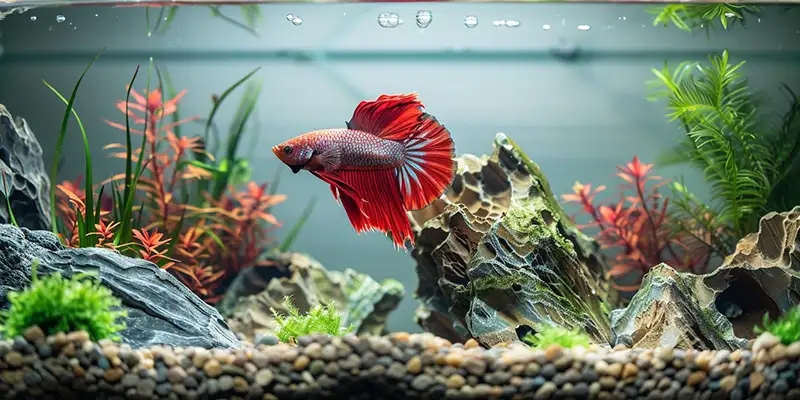
Setting Up Your Betta Tank
With all your supplies ready, it’s time to create the ideal Betta habitat. Follow these detailed steps to set up a tank that’s healthy, safe, and enriching for your Betta:
Cleaning the Tank and Checking for Leaks
Before starting, thoroughly rinse the tank with warm water to remove any dust or residue from manufacturing and shipping. Avoid using any soap or cleaning products, as these can leave behind chemicals harmful to Bettas. To check for leaks, fill the tank with water and let it sit on a stable surface for a few hours. If you notice any leaks, the tank should be replaced or repaired before you proceed.
After confirming there are no leaks, empty the tank using a gravel vacuum or cup to avoid lifting a heavy, water-filled tank. Dry the inside with a clean, soft cloth if needed.
Choosing the Right Placement
Choose a location that provides a stable environment for your Betta:
- Away from Direct Sunlight: Sunlight can cause algae growth and raise the water temperature. Avoid placing the tank in areas with direct sunlight, such as near windows.
- Stable Temperature: Position the tank in a draft-free area to avoid temperature fluctuations. Avoid placing it near air conditioners, heaters, or radiators that could cause the water temperature to vary.
- Secure from Pets and Children: Keep the tank out of reach of pets and young children who might accidentally tip or disturb it.
- Space for Equipment: If using an external filter, like a hang-on-back (HOB) filter, ensure there’s extra space behind the tank.
Ideally, place the tank near the center of a room where it receives indirect light and remains undisturbed.
Adding Substrate
Now that the tank is positioned, add your chosen substrate:
Leveling the Surface: Gently level the substrate with your hand or a small scoop to create a stable base.
Rinsing: If you’re using gravel or sand, rinse it thoroughly with water in a large bucket to remove dust and debris that could cloud the tank. Rinse until the water runs clear.
Layering the Substrate: Add about 2 inches of substrate evenly across the tank. For planted tanks, a thicker layer helps anchor plant roots and provides additional surface area for beneficial bacteria to grow. Aquarium soil or nutrient-rich gravel is ideal for supporting plant growth.
Arranging Plants & Decorations
Adding plants and decorations is a critical step for creating an attractive and stimulating environment for your Betta:
- Adding Water: Start by filling the tank with 1-2 inches of dechlorinated water. Pour water onto a plate or bowl to avoid disturbing the substrate.
- Placing Large Decorations First: Begin with large items like caves, driftwood, or rocks. Position them toward the back and sides to provide depth and visual balance. Ensure these items are stable to prevent tipping.
- Arranging Plants: Add taller plants toward the back and shorter plants toward the front for an open view of the tank. Plants like Java fern, Anubias, and Marimo moss balls are great choices for beginners. When adding live plants:
- Rooted Plants: Bury roots in the substrate while keeping stems and leaves exposed. Avoid burying the roots of plants like Anubias, which can rot if planted too deeply.
- Floating Plants: For floating plants like Amazon frogbit, simply place them on the water’s surface.
- Attaching to Decor: Attach plants like Java fern to driftwood using fishing line or aquarium-safe glue if needed.
- Avoid Sharp Edges: Double-check that decorations are smooth and safe for Betta fins. Sand down any sharp edges on items you add, or avoid placing them in the tank.
Arranging decorations thoughtfully gives your Betta interesting spaces to explore, hide, and rest, helping them feel safe and engaged.
Filling The Tank
With substrate, plants, and decorations in place, it’s time to fill the tank with water. Here’s how to do it carefully to avoid disturbing your setup:
- Use Dechlorinated Water: Always use water treated with a dechlorinator to remove chlorine, chloramine, and heavy metals, which are harmful to fish. Add the dechlorinator according to the product’s instructions.
- Pour Water Gently: To prevent disturbing the substrate and displacing plants, pour water slowly onto a plate, bowl, or plastic bag placed on the substrate. Gradually fill the tank until it’s nearly full, leaving about an inch of space from the top for your Betta to access surface air easily.
- Temperature Check: Use a thermometer to ensure the water temperature is within the ideal range for Bettas (76-82°F). Avoid drastic temperature differences, which could shock your Betta when they’re introduced to the tank.
Leaving a small space at the top also reduces the risk of your Betta jumping out.
I’d recommend API Stress Coat. Not only is it a water conditioner, but it also doubles up as a stress reliever, for when you add your betta.
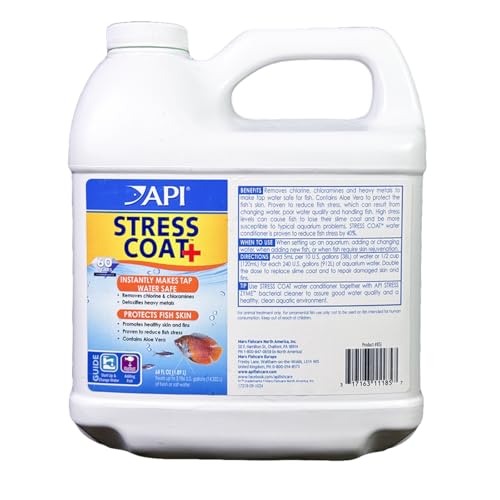
API STRESS COAT Aquarium Water Conditioner 64-Ounce Bottle
- Contains one (1) API STRESS COAT Aquarium Water Conditioner 64-Ounce Bottle
- Makes tap water safe and protects fish with dual-action formula
- Removes chemicals from tap water that are harmful to fish
- Replaces fish’s protective coat damaged by handling, shipping or fish fighting with healing power of Aloe Vera extract
Adding Your Filter
With the tank filled, it’s time to set up the filter:
- Positioning the Filter: If using a filter that hangs on the back (HOB), position it at the back of the tank. For internal filters, place it where it’s least disruptive to the overall layout and doesn’t block your Betta’s swimming space.
- Adjusting Flow Rate: Bettas prefer calm water, so adjust the filter to its lowest flow setting. If the filter lacks a flow adjustment, you can use plants, decorations, or a filter sponge to baffle the current, slowing it down.
- Testing the Filter: Turn on the filter and ensure water is circulating smoothly without creating a strong current. Gentle water movement is ideal, helping keep the tank clean without stressing your Betta.
A well-functioning filter keeps the water quality stable and reduces the need for frequent water changes.
Adding Your Heater
Next, add the heater to keep the tank’s temperature consistent:
Monitor for 24 Hours: Before adding your Betta, let the heater run for a full day to ensure it’s functioning properly and that the tank maintains a stable temperature. A thermometer placed on the opposite side of the tank from the heater will help verify even heating.
Placement: Position the heater near the filter to distribute warmed water throughout the tank. Most heaters have suction cups for secure attachment to the tank wall.
Set the Temperature: Adjust the heater to 78°F, which is optimal for Bettas. Anything between 76-82°F is safe, but the key is maintaining a stable temperature.
Cycling Your Tank
Cycling the tank before adding your Betta is one of the most crucial steps. This process establishes beneficial bacteria that break down harmful ammonia and nitrites, making the water safe for fish.
Betta fish care is tricky, but with proper guidance, you can succeed! Click here to read a comprehensive guide!
Fishless Cycling (Recommended)
A fishless cycle is safer for Bettas and is done without any fish in the tank. To start:
Allow 4-6 Weeks: A fishless cycle usually takes 4-6 weeks, though using a bacteria supplement can help speed up the process.
Add Beneficial Bacteria: Add a biological enhancer to jumpstart the growth of beneficial bacteria that will process ammonia and nitrites. Fluval Biological Enhancer is one popular option.
Check Water Parameters: Use a test kit to monitor ammonia, nitrite, and nitrate levels. During the cycling process, ammonia and nitrite levels will spike and then drop as beneficial bacteria establish. The cycle is complete once ammonia and nitrites reach 0 ppm and nitrates are present at 20 ppm or less.
To find out everything you need to know about fishless cycles I found this article incredibly helpful.
In-Fish Cycling (Not Recommended)
In-fish cycling is less ideal as it exposes fish to harmful toxins during the cycle. If you must do this:
- Add Beneficial Bacteria: Dose the tank with a biological enhancer to help establish bacteria.
- Monitor Parameters Daily: Use a test kit to check ammonia and nitrite levels daily. Perform frequent water changes to keep ammonia and nitrite levels low.
- Use Ammonia Detoxifier: Use products like API Ammo Lock to neutralize ammonia and protect your Betta.
Fishless cycling is recommended, as it’s safer and reduces stress for your Betta, giving them a healthy, ready-to-go home.
(Find what you need to know to keep your betta with other fish.)
Recap
Setting up a Betta tank doesn’t have to be complicated. By following these core principles, you’ll create a beautiful, thriving habitat for your fish:
- Get the Right Tank Size: A 5-gallon tank or larger is essential, providing the space your Betta needs to swim, explore, and stay healthy.
- Install a Filter and Heater: Bettas thrive in warm, clean water, so using a gentle filter and maintaining a steady temperature around 78°F are key.
- Choose the Right Substrate: Smooth gravel or aquarium soil works best, helping beneficial bacteria grow while giving plants a place to root.
- Decorate Thoughtfully: Add live or silk plants, caves, and smooth décor to create hiding spots and reduce stress for your Betta.
- Use Soft, Adjustable Lighting: LED lights on a timer allow for a balanced day-night cycle, keeping your Betta’s activity level healthy and natural.
- Cycle the Tank: A fishless cycle establishes necessary bacteria, creating a stable environment and minimizing water changes.
Conclusion
Creating the perfect tank for your Betta is both rewarding and essential for their long-term health and happiness. With a spacious 5-gallon setup, gentle filtration, stable heating, and thoughtful decor, you’ll be giving your Betta an environment that mimics their natural habitat. Every aspect, from smooth substrate to live plants and gentle lighting, contributes to reducing stress and boosting their well-being.
Taking the time to cycle the tank and establish beneficial bacteria is a crucial step for keeping water conditions safe and balanced. With these elements in place, your Betta will thrive, displaying vibrant colors and lively behavior. A well-set-up tank not only ensures a healthy, content Betta but also brings the joy of a beautiful, living ecosystem into your home.

Hello! I’m currently planning on getting a betta fish for the first time and I have some questions. I don’t really have the space for a 5 gal tank so I was wondering if either a 3.5 or a 4 gal tank would be okay for a betta fish. And I’ve been researching that if you have a tank that’s less than 5 gallons, you shouldn’t have a filter because the current can be too strong for the betta. I know it’s hard to keep an unfiltered tank clean most of the time, but I was wondering if there was any way I could effectively keep the tank clean. Thank you!!!
Hi Amber, 5 gallons is already the minimum size tank you should put a betta in, so I personally wouldn’t put them in anything smaller. They will be able to survive in smaller tanks, but they’re not going to be as happy. And to answer the filter questions, you can always buy a 5-gallon filter, and use filter sponge to slow the flow of the water coming out to reduce the current. Hope this helped!
I am looking for information about betta fish to take care of it in the best way so that it lives long and happy. This article is a complete manual. Very good and thanks for the tips.